In this post
The following blog post was written by Annette Fay at Aquaya, one of the only organizations in the water sector that combines proven innovations in science and technology with on-the-ground programs. Aquaya is a CommCare self-starter, meaning that they have designed and implemented their own CommCare project without any support from Dimagi. The blog post below is about their experience implementing CommCare for a water project in Senegal.
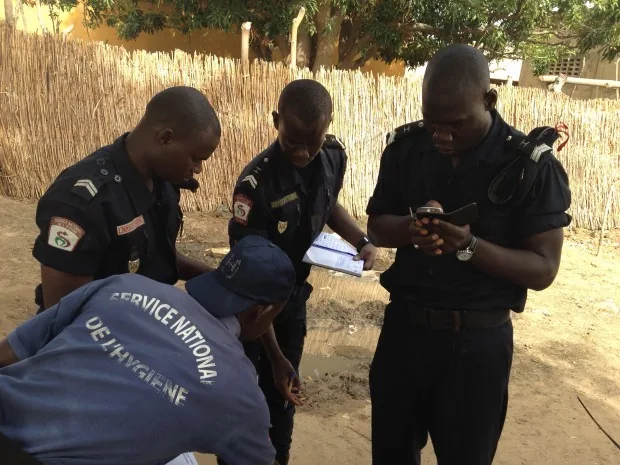
When health agents take water samples from rural water points in Sénégal, what additional information should they record? Rien à signaler – nothing to report/no observation – is not the answer. Especially if that water point isn’t recorded anywhere, or only one person on your team knows how to drive there – and an entire community depends on that water to survive.
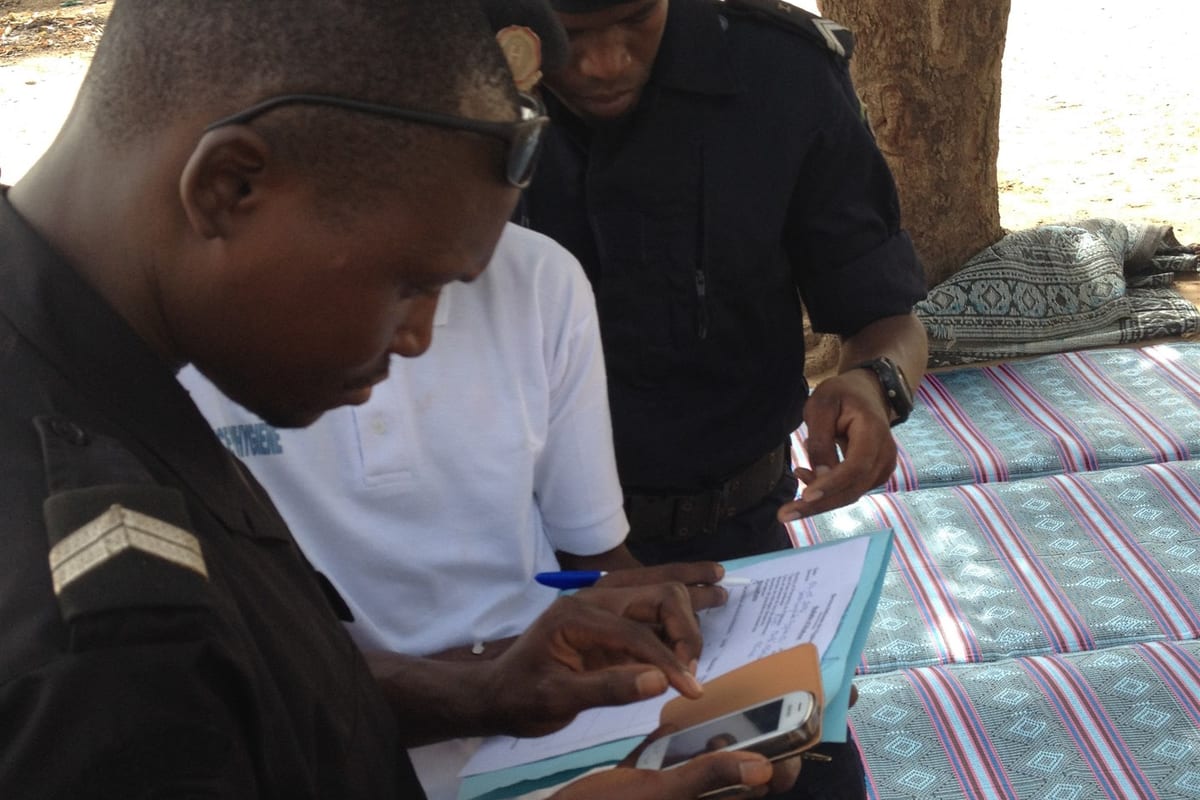
This was emphasized by the national Water Quality Manager at Service National de l’Hygiene (SNH) to health agents in our training on a new CommCare app that enables collection and submission of water sampling data through mobile phones in real time. SNH is one of our 26 partners across 6 countries in sub-Saharan Africa that are part of the 3-year research project, Monitoring for Safe Water (MfSW), that seeks to understand the challenges health surveillance agencies and water utilities face in testing water quality. Testing for water is a critical component in providing safe drinking water and happens behind the scenes on a regular basis in developed countries. We at the Aquaya Institute, a non-profit research and consulting organization that improves access to safe water and sanitation in developing countries, are identifying the challenges faced by institutions in testing drinking water and working to find strategies to solve them.
The data management challenge
One of the challenges that we have seen in the water quality testing programs among many of our 26 partners in sub-Saharan Africa is that of data management; even if they can test, to get the results to a regional or national office can require transportation and substantial amounts of staff time. Our partner in Sénégal, the National Hygiene Service (Service National de l’Hygiène, or SNH) has had a very successful water quality monitoring program since last August 2013 and have conducted over 2575 water tests for 5 parameters in 13 different sub-brigades (the smallest health center unit) – a large amount of water quality data to be sent from remote rural regions, standardized, and interpreted. Many of the sub-brigades struggle to borrow a computer from a different government office to email the data to the national office or send loose paper data sheets with colleagues who happened to be traveling to the regional office.
Using CommCare as a self-starter
To address this and other challenges, we’re using CommCare as a self-starter with SNH to see if an ICT tool can improve management of water quality data collected from rural areas in Sénégal. We observed that the 13 sub-brigades recorded different information about water points when they collect samples (for example, different information about the sanitary condition surrounding a water source – or nothing at all). Our goal was to make an app that fit with their existing data collection practices while also using the opportunity to standardize data collection so that it was useful to the sub-brigades, regional and national offices. We chose CommCare for a mobile platform because of our team members’ previous experience with Open Data Kit (ODK), user-friendliness of designing and building an app, and the options for support that CommCare offers. SNH is excited about this project because it will be the first time mapping all of the water points and will streamline their data management. Up until now, sub-brigades in rural Sénégal sent water quality data once a month to a regional manager who then sends it on to the national level. All follow-up to the sub-brigades was done by phone and there is little interaction between the national and sub-brigade levels.
How we built the application
How did we work with SNH to set up our CommCare application? After spending time in the field making sure we understood existing practices, we went through CommCare’s tutorials to learn the system and developed our questionnaire using CommCare’s template. We then used the questionnaire to create a preliminary version of the application in French and review the content of the forms with SNH’s national staff. We trained four sub-brigades in just one region of Sénégal to use CommCare to submit their water quality testing data. In our program, we are using CommCare’s case management feature – each water sample is a case, tracked through 4 forms: 1) record basic information about the water point when collecting samples (including GPS coordinates and information about the sanitary conditions of the water source); 2) record physico-chemical parameters of the sample when testing is conducted in the health office; 3) record microbial testing results the day after sampling; and 4) record actions agents take in response to the water quality of the sample. We made many changes to the content of our forms based on feedback from the health agents during the training and first few days trying it out in the field. We found CommCare easy to use to develop an application and Dimagi staff responsive over the mailing lists when we ran into problems we couldn’t solve on our own.
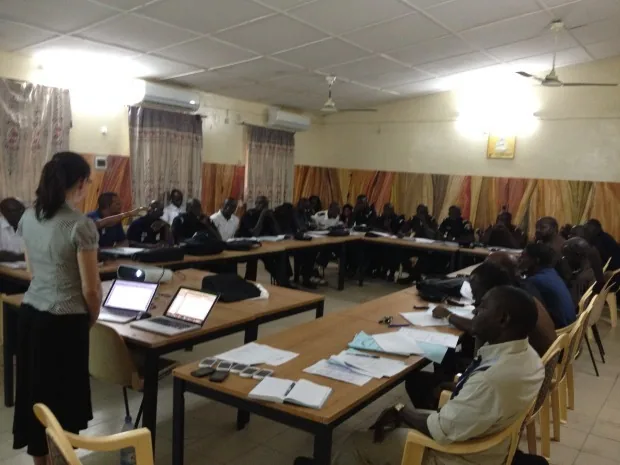
The training
The training itself consisted of two days of classroom instruction covering how an Android phone works, the content of the forms and how to use the app. We emphasized breakout sessions so the 35+ participants could practice in small groups what we reviewed as a large group. We created test logins for people with their own Smartphones to use our CommCare app on their own. Following the classroom training, we visited each sub-brigade for half a day and accompanied the sampling teams while they used the app for the first time to record sampling data from two samples.
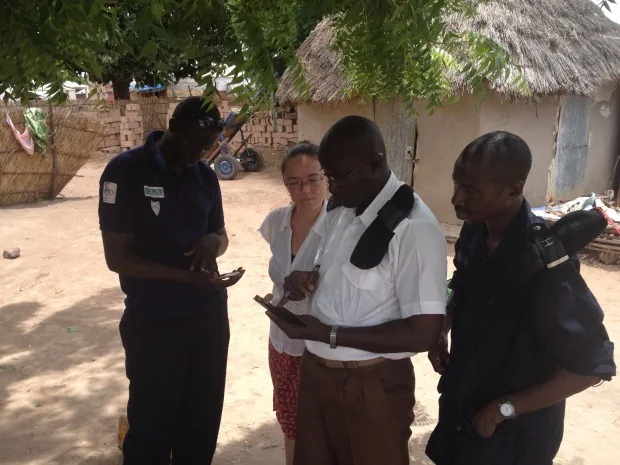
What comes next
Currently we are piloting the app in one region in Sénégal and we plan to roll out the program to two other regions in the coming weeks. We’re continuing to develop this application based on feedback from the SNH agents using it and are encouraged by their desire to develop their own CommCare application for other aspects of their work. We intend to transfer management of the project to our implementing partner in December 2014 and at this time they will be able to decide how much support they need and can afford.
Building your own CommCare app?
Self-starters design and launch their own projects on CommCare. Tell us about your program and we’ll point you to the right starting place.
Get in touch