In this post
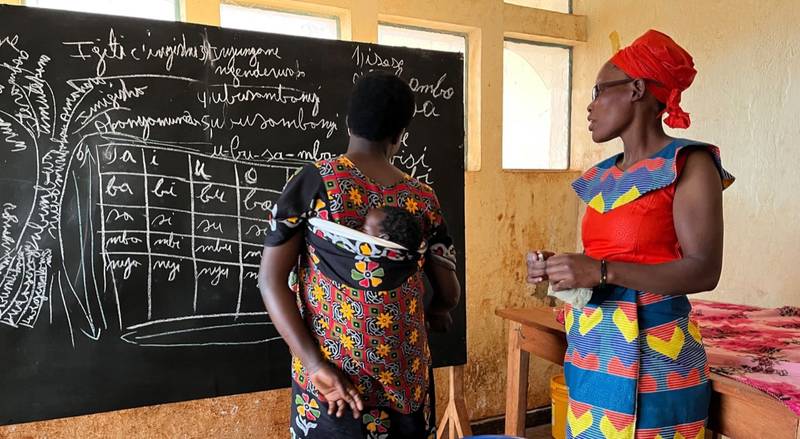
When we seek to create lasting change through partnerships with philanthropists and funding organizations, it’s the snapshot of a woman in Burundi who has learned to read and write, now runs a small business, and sends her daughters to school that grabs their attention, far more than any carefully crafted description of what we do.
“Now that I can read, I was elected as a women’s representative in our community. I also took a loan from my Savings Group to buy goats, and I will sell one to pay school fees for my children. No-one can underestimate me now.”
A Five Talents Savings Group member, Burundi
These individual transformational impacts are replicated tens of thousands of times across central and eastern Africa through Five Talents’ program partnerships. But much as each individual story resonates, we know that broader systemic change matters too. Our donors are often keen to understand how those individual stories of transformation lead to deeper impacts and transformation that is truly sustainable. For us at Five Talents, sustainable investment means that the impacts of generous philanthropy endure beyond the period of the investment to bring about lasting social and economic transformation owned by program members themselves, and indeed reach out beyond the individual to their family and community, and even to future generations.
Two decades of measurable change
In 2022 we commissioned an independent evaluation of our program in Burundi. There was already baseline data from when the project started purely as a Mothers’ Union literacy program 20 years ago, and the report was able to chart and measure cumulative impacts over a 20-year period in areas of literacy, poverty alleviation, girls’ education, sustainable savings groups, employment creation, gender equality, and community cohesion.
This pioneering evaluation within the savings group sector has shown that since program inception, over 144,000 people (78% women) have learned to read and write and now have a formal literacy qualification, accounting for 2.9% of the adult literate population in Burundi. Once literate, and with support through Five Talents, participants formed more than 6,200 community-owned savings groups. Remarkably, the evaluation showed that over 84% of those savings groups continued to operate independently for more than 10 years after the 2-year funding period ended, and many groups had also replicated organically.
78% of them women, accounting for 2.9% of Burundi’s adult literate population. Once literate, participants formed more than 6,200 community-owned savings groups, and over 84% kept operating independently for more than 10 years after the 2-year funding period ended.
This sustainable anchor point of savings groups within communities means that:
- Almost all members now employ at least one other person, and over a third of female participants and nearly half of male participants have started businesses which now employ two or more people. Many members were once subsistence farmers. Now, they are generating enough cash income to run businesses that employ others, creating a powerful multiplier effect in their communities.
- More girls are now attending school: 91% of female and 94% of male participants reported sending dependent children (notably girls) to school in 2022, compared to 62% and 52% in 2006.
- Increased incomes also allowed participants to invest in their households, which had a positive knock-on effect, especially for the children of participants, whose parents were now more likely to invest in their education and were more able to meet housing and healthcare needs.
This case study from Burundi shows the importance of longitudinal evaluation in demonstrating economic and social impacts far beyond the funding period. Truly sustainable development is where the transformation endures and multiplies, and where transformation is within the hands of the communities themselves.
Real-time impact data with CommCare
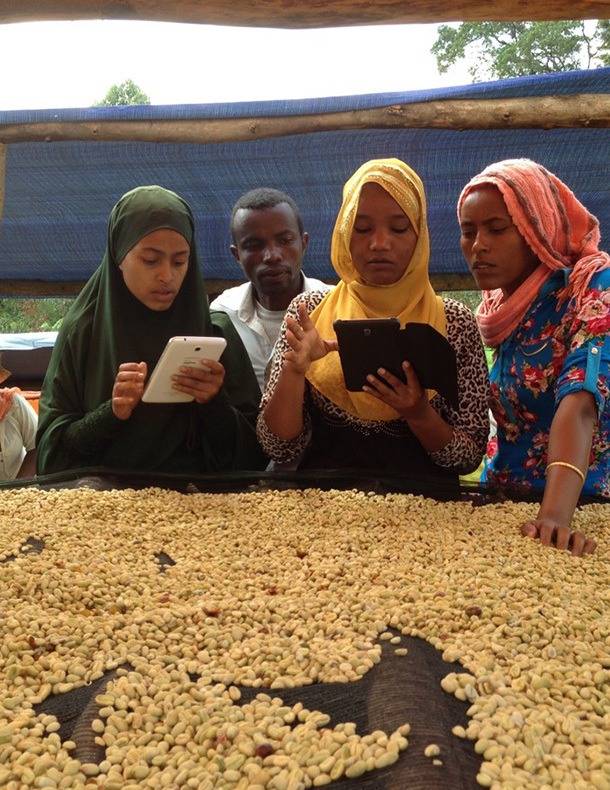
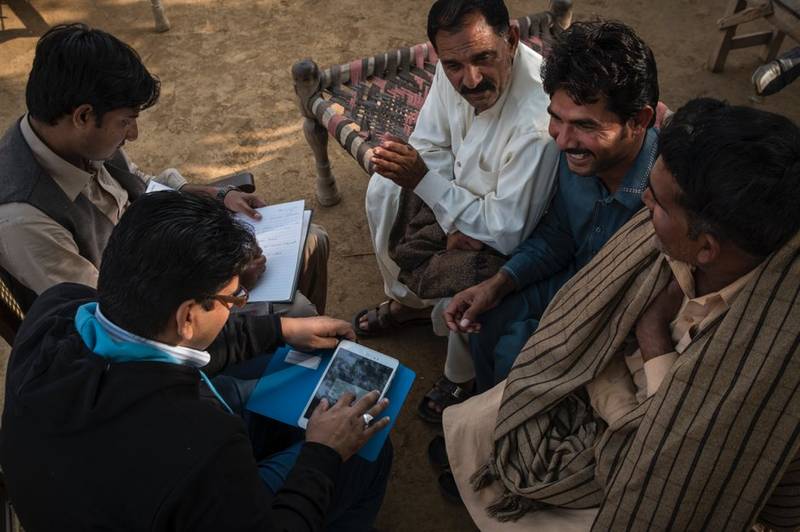
Another dimension that is proving increasingly important and fruitful in evaluating impact is a project we have established in partnership with our colleagues in Kenya using CommCare, a social impact data collection software application. The project aims to enhance the ability of our partners to document, understand, learn from, and deepen the impact of their work more quickly and efficiently.
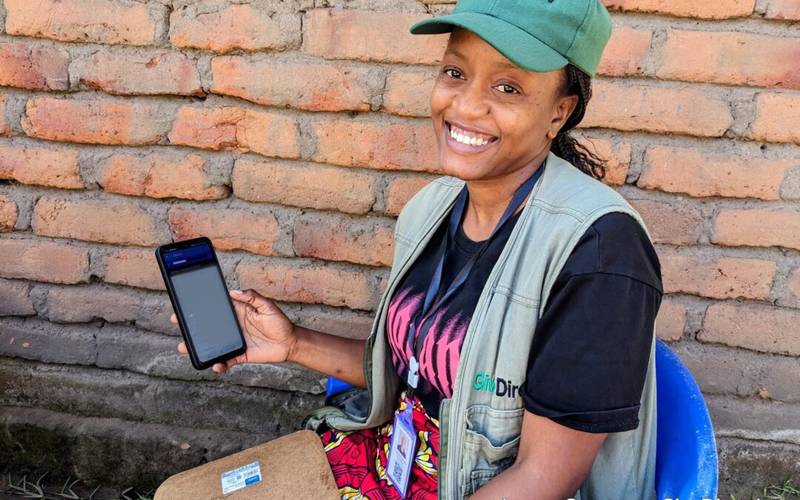
The implementation of CommCare means that the project team doesn’t have to collect data from the groups using a paper-based system. Field staff record the number of members, meetings, and training attendance, plus any additional information they need, using an electronic form on their tablet or phone, which automatically updates a central dashboard report in real time. CommCare doesn’t require internet, so you can collect information outside of internet range or en route from one training to another, which is crucial in remote and rural communities. Then when you reach an internet connection, it syncs and uploads.
As the project develops, the trainers will also use a free-text function to capture qualitative data, for example, issues or innovations that groups discuss at their training sessions or meetings. The system is able to flag keywords, which enables the field staff to identify trends, provide additional support where needed, investigate challenges that arise, or share success factors. This innovation enables partners to refocus and prioritize their limited resources for the greatest impact. For example, we will learn, and then be able to replicate, the best approaches to addressing gender-based violence or building climate-resilient businesses.
In speaking recently to the program leader in Kenya, he reflected:
“From a data quality perspective, CommCare allows us to validate field data. For example, we know where all the groups are and we can verify savings [amounts]. It allows us to set up a system of integrity. From the central office, we can see the penetration of a particular training and identify challenges. Or if members’ engagement is low, we can troubleshoot. When USAID came, they were able to verify the data by ensuring that it matched with what was recorded elsewhere.”
Five Talents program leader, Kenya
Replicating what works
A great example of how CommCare can help us replicate emerging program learning and best practice is in Tsavo, where our partners have developed a new training curriculum on environmental conservation. Using CommCare, they are now able to track both the delivery and impact, in terms of understanding and behavioral change, of each module. This enables them to assess much more quickly how effective it is, making changes as required and building evidence to showcase to peers, as well as funders, the impact of this new climate-smart training process. This should mean that others can replicate this new training more quickly.
Both the longitudinal evaluation in Burundi and the real-time data gathering in Kenya point the way in showcasing truly sustainable impacts. We hear the personal stories which tell of lives transformed, but we also gain the deep and broad view alongside the immediate and long-term data that draw those stories together. We can measure and evaluate the impacts to ensure we keep learning and adapting. This gives us, our in-country partners, as well as funders and investors, the confidence to know that together we are in partnership supporting transformation that is truly sustainable.
Curious about participatory impact?
Hear the stories and lessons behind this work on the High-Impact Growth podcast.
Listen to the episode