Blog  /  Toolkit

Making Resilience Resonate

A User-Centered Guide to Adapting the Resilience Message Program

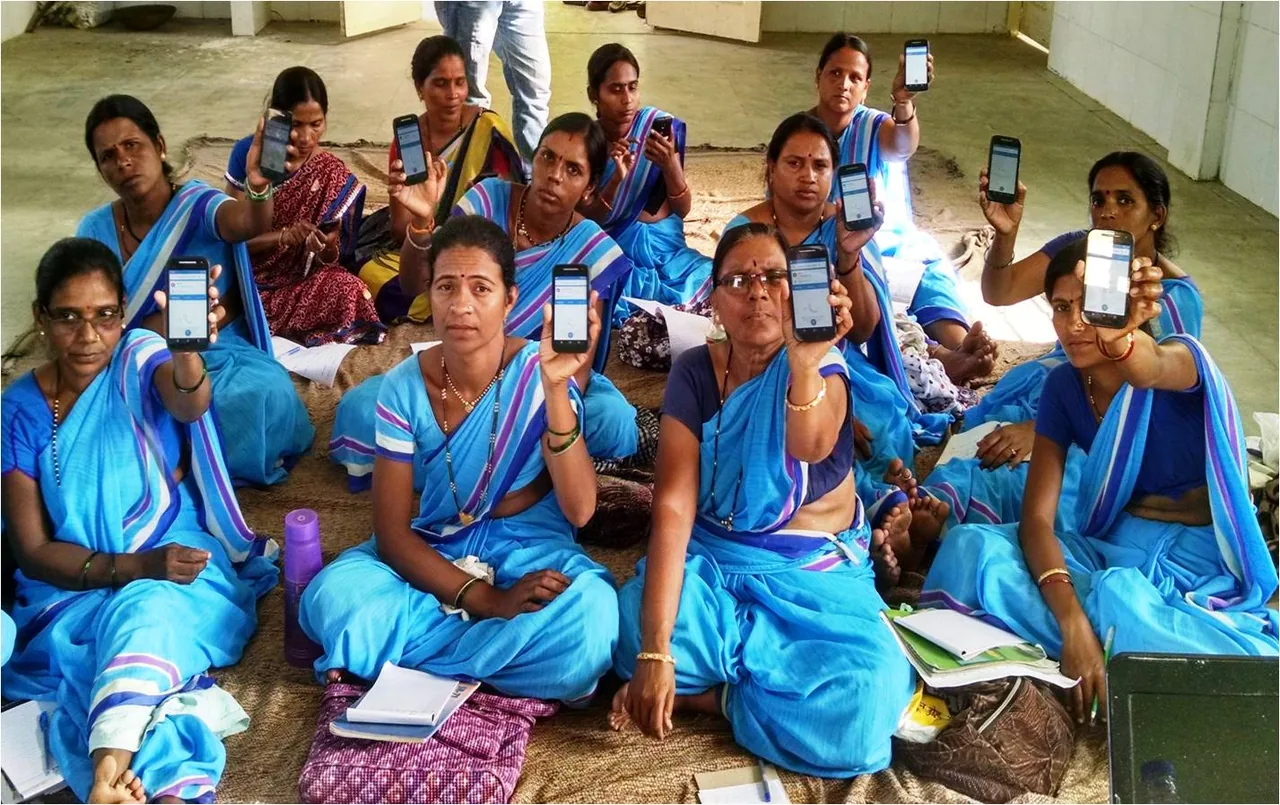
Community health workers seated together, each holding up a mobile phone running a CommCare application

Who is this Guidebook For?

This guidebook is for independent researchers, NGOs, government officials, or private organizations that are interested in adapting the Resilience Message Program for improving the resilience and wellbeing of healthcare workers. The foundation of this guidebook is a set of 82 evidence-based, free, and adaptable messages created by the Johnson & Johnson Center For Health Worker Innovation (J&J CHWI) as part of the Resilience Collaborative, “a global learning community that aims to advance learning and drive adoption of evidence-based strategies for health worker resilience, particularly in low-resource settings.”

In order for the Resilience Message Program, or any other content-based program, to be successful, we believe that the content must be communicated in a way that is usable, accessible, and engaging for the target audience. In this case, the target audience are health workers, primarily from low- and middle-income countries. Therefore, this guidebook provides a roadmap for adapting and localizing messages that will resonate with health workers from diverse geographical and linguistic settings. Readers will be taken through a process of adapting messages to a local context, translating messages from English into a target language, and testing messages with health workers.

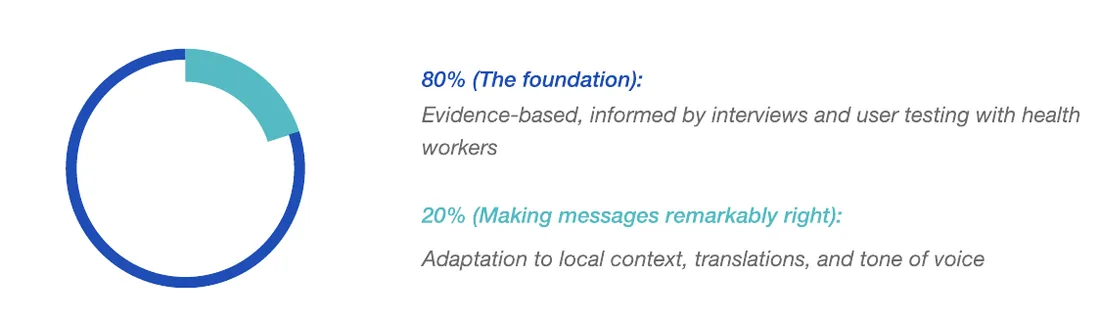
The messages are considered to be 80% ready to use, with the remaining 20% requiring adaptation and translation of the content to make it suitable for a local context.

Ring chart: 80% (the foundation) is evidence-based, informed by interviews and user testing with health workers; 20% (making messages remarkably right) is adaptation to local context, translations, and tone of voice

Please note that the purpose of this guidebook is limited to the adaptation of the Resilience Message Program for a particular audience of health workers. If you are interested in learning more about the creation of the message program or considerations for its implementation, we recommend reviewing the J&J CHWI publication “Building Health Worker Resilience: A Toolkit To Protect Against Burnout On The Front Lines.”

Introduction

This guidebook provides a roadmap for adapting and localizing the Resilience Message Program, a set of 82 evidence-based, free, and adaptable messages created by the Johnson & Johnson Center For Health Worker Innovation (J&J CHWI) as part of the Resilience Collaborative. When implementing the Resilience Message Program, it is important to adapt and contextualize the message content to make it relevant to the intended audience and their unique needs, socio-economic context, and cultural expectations. You can think of content adaptation as an important prerequisite to developing a resilience-building program that meets the needs of health worker audiences.

While approximately 80% of the Resilience Message Program will remain the same, implementers should anticipate that approximately 20% of the content will need to be modified for a number of reasons, including that

  • Direct translation from English to the target language might not be possible
  • Certain concepts or phrases may need to be updated to ensure cultural relevance and appropriateness.
  • Different parts of the messages may have to be highlighted based on the experience of the selected audiences.
  • Messages will have to be adapted as per the social and legal conventions of the implementation setting.

In this guidebook, the process of adaptation will be guided by human-centered design principles. In other words, you can imagine health workers as standing at the center of a resilience-building intervention, with any changes to the content increasing how well messages resonate with the audience’s thinking, behavior patterns, and experiences. In order to make these changes, insights from health workers will be gathered through the process of iterative user testing.

In each chapter, you will see real-world examples of how the Resilience Message Program was adapted for a variety of contexts. These examples come from the shared experiences of a working group that collaboratively adapted the Resilience Message Program for health worker audiences in Brazil, India, Mexico, Nigeria, Rwanda, and Uganda. While your content adaptation journey will be unique, these examples are intended to help you think through the questions that we discussed in our working group sessions.

Getting Started

In preparation for adapting the messages, we recommend doing the following:

  1. Download and review the Resilience Message Program

    You can download the Resilience Message Program and Message Library from here: https://chwi.jnj.com/about/global-interventions/the-resilience-collaborative/resources

  2. Define your audience

    Your audience includes the people who are expected to go through the Resilience Message program (and ultimately, we hope, to adopt resilience-building behaviors). The more precisely you define your target audience, the easier it will be to test whether the adapted messages resonate with the needs and lived experiences of your audience. Therefore, defining your audience is a key prerequisite for adapting the messages. Examples of audiences include nurses, doctors, and community health workers. Once you define who is in your audience, the next step is gathering the contextual information you will need to effectively adapt the messages. For example, you may want to collect information on health worker demographics, their daily routines, challenges at the workplace, influencing groups, literacy levels, access to technology, experience using digital health tools, and access to mental health resources.

  3. Select your target language (if not using the messages in English)

    Your target language is the language in which the messages will be consumed by your audience. This should align with the language health workers are most comfortable reading. Note that translation is an important but significant task that requires an investment of time and resources. If you plan to adapt the messages in a language other than English, you should plan ahead to work with a translator that has the relevant skills and time available to translate the messages.

  4. Mode of delivery

    The mode of delivery is how the content will be shared with your audience. Determining this ahead of time helps you determine if there are any known limitations related to that specific mode of delivery. For example, if you plan to deliver the messages to health workers using SMS, there might be cost implications or limitations on the length of messages. To determine the best mode of delivery, conduct research on how many of the health workers own a mobile device and their phone usage patterns. For the purpose of this guidebook, we will focus on digital modes of delivery. While choosing a digital platform for disseminating the messages, consider the following

    • Will the messages be disseminated through SMS, a digital app, whatsapp, chatbot etc
    • Will the health workers have access to the internet to view the messages digitally
    • Is there a word limit on the content that can be delivered via a specific mode of delivery
    • What are the cost implications for choosing the specific method of delivery?
  5. Selecting the set of messages to be adapted

    The Resilience Message Program (RMP) includes a set of long and short forms of the messages. Both long and short forms of messages convey the same information but are written differently to accommodate the character count constraints of different digital delivery systems. For example, the long form messages might provide more detailed information about resilience-building behavior.

    • The long form messages are under 400 characters. We recommend using the long form messages for delivery methods like mobile applications, Whatsapp, and Telegram that don’t limit the length of messages.
    • The short form messages are under 150 characters. We recommend using the short form messages for your delivery methods that have character limits, such as SMS.

    Based on your mode of delivery, you can choose to adapt either the long or short form of messages based on your requirements. If you don’t know now, we recommend adapting the long form messages (you can always shorten them later on).

  6. (Optional, recommended) Download and review the Resilience Collaborative Toolkit, Measures Library, and Evidence Library

    These resources were published by the Johnson & Johnson Foundation Center for Health Work Innovation as part of The Resilience Collaborative. You can download the resources from here: https://chwi.jnj.com/about/global-interventions/the-resilience-collaborative/resources

Content Adaptation Checklist

Use the checklist in this section as a guide while you move through the recommended steps required to complete the content adaptation process.

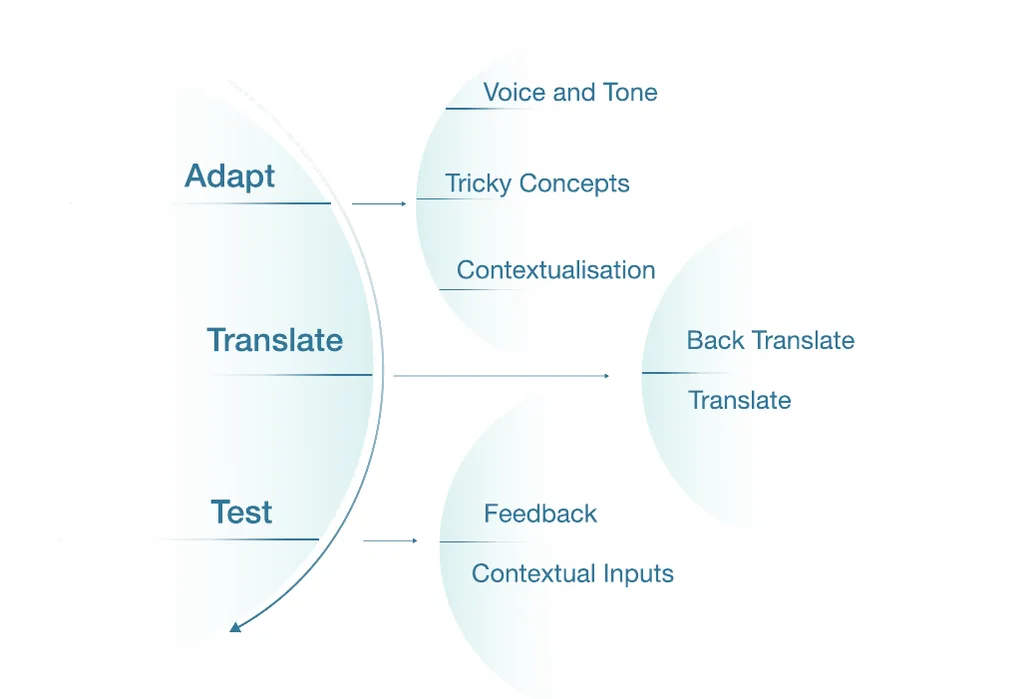
Diagram of the content adaptation process: Adapt covers voice and tone, tricky concepts, and contextualisation; Translate covers translate and back translate; Test covers feedback and contextual inputs
StepKey ElementsGuiding Questions
Prepare
  • Which health workers will read the messages
  • Which language are health workers most comfortable reading?
  • How will messages be shared with health workers? Are there any content limitations related to this dissemination channel?
AdaptVoice and Tone
  • Create a list of possible personas
  • Select a persona
  • Define the persona by giving it a voice and tone
  • How should health workers feel when they read the messages?
  • Who should health workers think that the messages are coming from (the persona)?
  • What are the power dynamics between a particular persona and health workers
  • How often do health workers interact with this persona
  • Is this persona someone health workers can trust
  • Does this persona have an emotional connection with health workers
  • How likely are health workers to take advice from this persona?
Complex concepts
  • Review the messages and identify the complex concepts
  • Adapt messages to local context
  • Which topics are culturally sensitive for health workers
  • Which concepts are new and/or not commonly used by health workers
  • Which concepts cannot be translated directly to the target language?
Translate
  • Translate the adapted content in the local language
  • In what language will health workers interact with the Resilience Message Program
  • Who will serve as a translator and reviewer to collaborate on the translation process
  • Is the translation appropriate based on the colloquial language used by health workers
  • Does the translation retain its intended meaning when back-translated?
  • Is the translation consistent throughout?
Test
  • Iterative user testing
  • What are the learning objectives for user testing
  • Will your testing occur in person or remotely
  • Will the test be moderated (facilitated) or unmoderated (unfacilitated)
  • What type of data (e.g. exporative, assessment, comparative) will be collected?
Chapter 1

Incorporating User Voice

It’s not only what you say, but how you say it

In this chapter, you will gain an understanding of

  • How to select a persona for the messages. In other words, who will the audience think that the messages are coming from
  • How to select a voice and tone for the messages. In other words, how will the audience feel based on the way the messages are communicated?

Answering these questions might require multiple conversations with your team, implementing partners, and health workers. While this could mean scheduling meetings, traveling to health centers, and investing time up front, we believe that getting this part right is foundational for the work you’ll do later on in the process. Once you’ve arrived at these answers, write them down and keep returning to them as you make progress on the subsequent steps. This is a good way to validate that all of the messages have a consistent voice and tone throughout the process.

Importance of Tone of Voice in Communication

In all forms of communications, the tone of voice, or the manner in which words are spoken, helps us communicate the sentiment behind a message. This ultimately influences the way an audience perceives what has been said. For example, the same piece of constructive feedback can serve to motivate or upset someone depending on how the feedback is communicated. In the Resilience Message Program, the way messages are conveyed will impact the way health workers feel about the content. One way to develop an appropriate tone and voice for the message program is to associate these qualities with a particular persona that resonates with your audience.

Creation of Personas

Personas are prototypal users whose characteristics represent the needs, lifestyle and perspective of a larger group. In other words, a persona in the human-centered design process is an imperfect but representative characterization of a larger group of people. For example, you can imagine that a “doctor” persona might communicate with formal, serious, respectful, and matter-of-fact language. On the other hand, a “close friend” persona might use a funny, casual, enthusiastic, and irreverent tone of voice. While these characteristics don’t represent every doctor or close friend, they can be roughly representative of an audience’s perception about these personas.

Let’s look at an example:

Underlying message

You should get vaccinated to prevent illness. You may experience minor side effects as a result of a vaccine.

Message delivered by a Doctor

“Based on your health history, I advise you to get vaccinated. You are 80% less likely to be hospitalized if you receive the vaccine. You may experience minor side effects as a side effect of the vaccine.”

Message delivered by a Close Friend

“I got vaccinated recently and it wasn’t bad at all! I had a headache afterwards and my arm was sore for a few days, but it was worth it for the peace of mind I got by being protected from illness. You should go for it!”

When applied to the Resilience Message Program, applying a characteristic persona and voice and tone to the content allows you to influence how health workers will perceive the messages. By understanding the relationship that your health worker audience has with this persona, you can make decisions about how to present information throughout the message program.

We recommend defining your persona and their voice and tone up front to ensure consistency while adapting the message program. Especially if multiple people will be working in parallel on content adaptations, agreeing on a common persona and voice and tone at the beginning enables you to maintain consistency in your writing styles.

Defining a Persona’s Voice and Tone

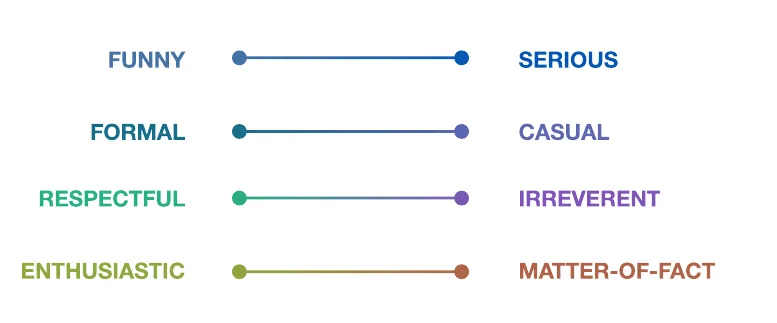
There are several ways to define the voice and tone of a persona. For the purpose of this guidebook, we recommend defining the following dimensions of your persona’s voice and tone:

Four tone-of-voice scales: funny to serious, formal to casual, respectful to irreverent, and enthusiastic to matter-of-fact
Source: https://www.nngroup.com/articles/tone-of-voice-dimensions/
  • Funny or Serious: Will you use humor to convey the messages or will they be communicated in a serious manner
  • Formal or Casual: Will the messages be conveyed using formal or informal language
  • Respectful or irreverent: Will the messages be communicated in a serious and respectful manner or will they lack seriousness? A respectful tone is important as it enhances the quality of communication and will establish genuinity
  • Enthusiastic or matter-of-fact: Will the messages be conveyed with enthusiasm and emotion or will they be stated as facts?

Examples of Personas

Based on the dimensions of voice and tone outlined above, let’s take a look at three personas that are relatively common at the field level in India: government officials, supervisors, and co-workers. The example below shows how each persona’s tone of voice has been defined:

Line illustration of a government official wearing a turban

Government Official

Serious, Formal, Respectful, Matter-of-fact

Line illustration of a supervisor in a collared jacket

Supervisor

Serious, Casual, Respectful, Matter-of-fact

Line illustration of an experienced co-worker

Experienced Co-Worker

Serious, Casual, Respectful, Enthusiastic

In addition to having its own voice and tone, each persona also has a different relationship with health workers in India. While government officials wield significant power and authority in local health settings, experienced co-workers are less distant from the health worker in both their hierarchy and physical setting. As a result of these differences, a message coming from one persona or the other will leave health workers with a different perception of the messages being conveyed.

Selection of Personas

Now that you know what a persona is and how to define its voice and tone, how do you select a persona for your audience? We suggest starting by making an exhaustive list of options and then narrowing it down with some questions. If you work closely with health workers, you may already know what your options are. If you’re further removed from health workers, research can help you understand the context in which health workers operate, including the multiple roles they play in their homes and communities, their daily challenges, and the people who influence their patterns of behavior.

Once you have your list of possible personas, here are some questions to ask yourself:

  • What are the power dynamics between this persona and health workers
  • How often do health workers interact with this persona
  • Is this persona someone health workers can trust
  • Does this persona have an emotional connection with health workers
  • How likely are health workers to take advice from this persona?

After reflection, you might narrow your list down to a handful of personas, each with a unique voice and tone. That’s okay. Keep this list handy. We’ll talk about how to test various personas with health workers in Chapter 4. But for now, let’s take a look at how to ensure the messages are relevant to health workers by ensuring they are adapted to the local context.

Chapter 2

Unraveling Complex Topics

“The key ingredient to a better content experience is relevance.”

Jason A Miller

In this chapter, you will gain an understanding of

  • Unraveling Complex Concepts: In other words, how can I identify and adapt terminologies from the Resilience Message Program that are new and/or not commonly used by my audience
  • Incorporating Relevant Examples: In other words, how can I improve the messages with examples that are relevant to the context of my audience
  • Translating the Resilience Message Program: In other words, how can I accurately translate the messages into a target language?

What are ‘Complex’ Concepts?

‘Complex’ concepts are those that could jeopardize the relevance or understanding of the messages due to a lack of adaptation to a local context. While the Resilience Message Program provides you with a pre-decided set of messages, it is almost guaranteed that there are terms, concepts, or references made in the messages that won’t be relevant to your audience. Identifying and adapting these concepts is key to a successful implementation of the Resilience Message Program.

We define complex concepts as topics that are:

  • Culturally sensitive: It is important to note that some of the terminologies and concepts mentioned in the Resilience Message Program should be described with care and may require different communication approaches. For example, messages that encourage health workers to seek support for mental health challenges may need to be adapted based on mental health literacy levels and support structures available to a target audience. It is critical for implementers to be aware of cultural nuances and adapt the messages accordingly.
  • New and/or not commonly used: Since the concept itself isn’t understood, these concepts are better explained using examples from someone’s daily life. For example, members of the working group found that the word “resilience” is not well understood among health workers.
  • Difficult to translate directly: Not all English words can be directly translated to another language. These concepts may need to be communicated using alternative words or explanations. For example, the word “stress” cannot be directly translated from English to Hindi; an approximate translation for the word “tension” was used instead.

Using the points above as a guide, we recommend reading through the Resilience Message Program and highlighting any messages, phrases, or words that contain complex concepts. Your institutional and practical knowledge of health workers will be a critical asset in identifying and addressing these tricky concepts. If time permits, you may even decide to engage health workers directly to help you with this activity. It is important to identify these concepts during user testing, make sufficient adaptations to the content, and get validation on your adaptation of the concepts to ensure that they resonate with your audience.

Case Study: Complex Concepts from India

As part of Dimagi’s field testing of the message program with community health workers in Katni district in Madhya Pradesh, the following topics were identified as tricky concepts:

Here is an example of how a ‘complex’ topic was broken down into simpler ideas to make it more comprehensible for the audiences as part of Dimagi’s field visit.

Stress

Why

To start with, the concept of ‘stress’ was explained by highlighting the commonly known factors that can lead to stress amongst health care workers. We added the following examples from their day-to-day lives: high workload, long working hours, and balancing home and work responsibilities.

What

Further, this concept was built on by emphasizing on the signs of stress that the workers should be able to identify. For example, while experiencing stress, one may experience tiredness, shortness of breath, and headaches. These are all common signs of stress and it is important for individuals to recognize these signs of stress.

How

Conclude the message by sharing examples of how stress can be managed better. For example, encourage health workers to take micro-breaks in between work. These short 10 minutes breaks can be during their lunch hour or in the afternoon.The suggestions were added in accordance with the steps mentioned in the Resilience Message Program.

Adapting Complex Concepts

Once tricky concepts have been identified, they should be adapted into language that can be easily understood by your audience. In the case of concepts that are new to health workers or can’t be directly translated, you might need to find proxy words or concepts that can help you describe a concept. It’s important to look for adaptations that resonate with colloquial speech among your audience.

Another way to explain complex concepts is by outlining the “why,” “what,” and “how” of a message. The steps below show you how to do this:

  • Why: Explain how a specific concept has relevance to a health worker’s life. For example, if a message recommends taking micro-breaks, you might explain that taking these breaks will allow a health worker to recuperate between visits with patients.
  • What: Add examples from daily lives that are familiar to your audience. For example, a message might acknowledge that health workers experience stress at the workplace. You can include an example of heavy patient caseloads or limited resources at a hospital to illustrate stressors that are relevant to your audience.
  • How: Break down the concept into actionable steps. Especially for new concepts, providing a step-by-step process for health workers to follow can make it easier to practice a new behavior. For example, if a message talks about mindfulness, you might add a series of steps describing how to practice mindfulness while walking.
Chapter 3

Translation

“Even the simplest word can never be rendered with its exact equivalent into another language.”

Kimon Friar

In this chapter, you will gain an understanding of:

  • Selecting a target language: In other words, in what language will health workers interact with the Resilience Message Program?
  • Establishing a translation team: In other words, who will serve as a translator and reviewer to collaborate on the translation process?

Selecting a Target Language

Once the content has been adapted based on the learnings in chapter 1 and 2, you can start the process of translating the content into the target language. When selecting a target language, ensure that the language is well understood by the target audience in writing; sometimes health workers will be more comfortable speaking in a language than they are reading. It’s difficult to go backwards once you’ve selected a target language, so be sure that you’ve selected the right one at the beginning of the process.

Establishing a Translation Team

It might sound obvious, but it’s important to acknowledge that translating the Resilience Message Program is a large undertaking. As you saw in the previous chapters, a lot of work goes into selecting the right persona and voice and tone for your messages and adapting complex concepts to be understandable. In order to preserve the changes you made to the message program, translators should be aware of the importance of nuance in the messages. The same feeling you hope to elicit from messages in English should be conveyed in the target language as well.

When establishing a translation team, we recommend identifying one translator and one reviewer. Both individuals should be fluent in both languages (English and the target language) and should ideally have knowledge of your audience. For example, our team in India worked with a translator who has fluency in both English and Hindi and has years of experience conducting field work with community health workers. This translator was well positioned to translate the Resilience Message Program because they knew how to frame the messages in a way that would be understood and were able to leave the intended voice and tone of the messages intact.

Once you’ve identified a translator and reviewer, we recommend starting the process with the following steps:

  • The Translator begins by translating the first 10 messages of the Resilience Message Program. While translating and reviewing the messages, the Translator should consistently back-translate (in other words, translate from the target language to English) to ensure that the intended meaning of the message was retained in the target language.
  • Once the initial 10 translations are done, they are shared with the Reviewer who reviews the translations and takes a note of any recommended changes.
  • Finally, the Reviewer shares their feedback with the Translator during a meeting. As an outcome of the meeting, the Translator and Reviewer should finalize a translation for the initial 10 messages. This helps to establish a working relationship between the team and allows any issues with translation to be addressed before getting further into the process.
Chapter 4

Iterative User Testing

“When we do a lot of user research, it’s easy to feel confident...But if you do user research well, you will always find something that is surprising. No matter how much research we do, no matter how much time we spend with our customers, we can’t completely know them. And I feel like the goal of user research should be to find those moments.”

Teresa Torres, Product Discovery Coach and Founder of Producttalk.org

In this chapter, you will gain an understanding of:

  • User Testing: What is user testing? Why is user testing important?
  • Planning for User Testing: How can you select an appropriate user test? How can you create a user testing plan?

Overview of User Testing

In this chapter, we discuss how to validate that your adaptation of the Resilience Message Program is usable and acceptable for your audience. We recommend that implementers follow an iterative user testing approach that is based on the principles of human-centered design. In other words, we recommend that you conduct multiple (iterative) rounds of testing with health workers (your users) and that your tests be conducted directly with your audience (human-centered design).

In the context of the Resilience Message Program, iterative user testing is important because it allows you to make incremental, user-responsive changes to the content based on insights and feedback from health workers. User testing provides an opportunity to assess how real users will react to the resilience messages when they are disseminated.

Planning for User Testing

Before starting user testing, implementers should have a clear understanding of their audience, resources available (time and money), and the learning objectives of the user test. Below are some of the guiding considerations while planning user testing:

Selecting users for testing: In an ideal scenario, user testing allows implementers to anticipate challenges, questions, and feedback from their audience before a product is rolled out, therefore making the implementation process smoother. In order to realize the full potential of user testing, it’s important to select users that are representative of the larger audience for whom the program is intended. The representative users should roughly reflect the range of demographics, socio-economic background, knowledge, capability, and beliefs of the larger audience. For example, you may select some users from rural areas and others from urban settings. You should also ensure that you are able to secure any necessary permissions to interact with users before the test.

Resource availability: User testing is a resource-intensive process. Thus, it is important to assess your available resources (both human and financial) before planning the testing. For example, do you have adequate human resources to conduct the user testing? What would be the financial implications of conducting the user testing? Would you be able to provide any monetary or non-monetary compensation to the participants?

Setting the learning objectives: Before embarking on user testing, it’s critical to align on the learning objectives of your user testing. This involves brainstorming on the outcomes you are trying to achieve as part of the user testing. For example, your user testing might be used to assess users’ reactions to the content shared, to gather feedback on the translation of the messages, or to assess whether users are able to understand the complex concepts you identified earlier.

Choosing the right Usability Test

Once your learning objectives are set, the next step is to decide which type of user test will be conducted. Below are a list of considerations you can use to select the type of user testing you conduct:

  • Will your testing occur in person or remotely
  • Will the test be moderated or unmoderated
  • What type of data (e.g. qualitative or quantitative) will be collected?

As an expansion of the questions mentioned above, the table below provides an overview of user testing approaches that you can choose from, grouped by consideration:

Key ThemesTypes of user testingConsiderations
Access to participantsRemote Testing

Testing is conducted via phone or internet interactions without the physical presence of the user

  • Pro: Allows the implementer to test a larger sample size and can be more cost-effective.
  • Con: Not ideal for settings where users lack access to the internet or have poor phone connectivity.
In-person Testing

Testing is conducted in the physical presence of the user

  • Pro: Allows the implementer to gather both verbal and non-verbal data (e.g. body language).
  • Con: Often more time- and money- intensive due to the need to travel to a user’s physical setting.
Facilitation methodModerated

Testing is conducted under someone’s supervision.

  • Pro: Implementers have the opportunity to ask follow up and probing questions
  • Con: Often more time- and money-intensive due to the need to facilitate each user interaction.
Unmoderated

Testing is conducted without direct supervision, for example by responding to a paper survey.

  • Pro: Often less resource intensive because interactions don’t require facilitation
  • Con: Implementers are unable to ask follow up or probing questions.
Data OutputsExplorative

Open ended tests where the target audience is asked to share their opinions and emotional impressions of the content shared

  • Pro: Implementers can understand the perception and emotional response of users to the messages
  • Con: Data is difficult to quantify.
Assessment

Close-ended tests that assess the user’s satisfaction with the content shared

  • Pro: Implementers can quantify the acceptability of the messages shared
  • Con: Qualitative insights may be lacking, especially in unmoderated tests.
Comparative

Comparative tests that weigh various options against each other. In the context of RMP, this could involve asking the audience which voice and tone they prefer

  • Pro: Implementers can validate selections throughout the content adaptation process.
  • Con: In order to maximize the impact of this test, users shouldn’t be asked to compare too many items.

8 Usability Testing Methods That Work

Creation of a Usability Test Plan

Let’s pretend that you reviewed the user testing approaches in the previous section and decided that you want to conduct in-person, moderated interviews with a small group of 15 health workers. The learning objective of the user testing is to assess whether the complex concepts of resilience and mindfulness have been adequately addressed in your adaptation of the messages. In this case, you may opt for an explorative assessment method that allows you to understand how health workers perceived the messages.

Best practices for conducting user testing
  • Be succinct when sharing the instruction on how the test will be conducted.
  • Spend some time building a rapport with the participant to ensure that they feel comfortable.
  • Observe and document both verbal and non-verbal cues
  • Be a good listener
  • Keep your personal biases away by framing the follow up questions to ensure neutrality.

Once you select a user testing approach, it’s important to design a user testing plan that establishes a common set of protocols and guidelines for the test. This ensures a standardized experience for your participants and allows room for flexibility to adapt the plan on-the-go. We recommend that a user testing plan includes the following components:

Scope of work

  • The target audience (e.g. the number of health workers who will participate in the testing), the location of the test, and the data points that will be collected as part of the test. In the context of the Resilience Message Program, you may also want to specify which messages will be tested as part of the scope of work.

Resource planning

  • Calculate the human and financial resources required for the user testing activity. If you select a moderated testing approach, it is also critical to consider if the moderators will require any prior to conduct the user tests.

Logistics Planning

  • Once the scope of work and resources are finalized, implementers should focus on planning logistics for conducting the user testing. This can include
    • Securing relevant permissions to conduct the field visit.
    • Identifying the participants who will be a part of the usability testing based on the guiding questions shared earlier in this section.
    • Reserving a conference room or other space where the test can take place, ideally near to the user’s place of work to reduce the time they spend on the test
    • Setting up monetary or non-monetary compensation for participating in the test
    • Creating a test schedule that the moderators should follow as part of the testing plan. A sample is outlined in this section of the appendix.

Session planning

  • It is important to determine the length of time required for conducting user testing. As a best practice, the duration of the test should be long enough for participants to warm up to their interaction with the moderators but short enough that the test doesn’t significantly disrupt the participant’s regular schedule.

Metrics

  • Prior to conducting the test, implementers should finalize the data points that they wish to collect as part of the process. A survey or interview script should be developed to ensure that the desired data is collected as part of the test.

Create testing tools

  • As part of the test plan, organizations will need to spend some time creating collateral for conducting the test. This can include consent forms and data collection tools that will be used to record responses to the test (such as the sample listed in the appendix).
Examples: Create testing tools

During the working group, many organizations were planning to implement the Resilience Message Program in areas where health workers have limited literacy levels. In order to mitigate this challenge, organizations recorded the messages and shared them as audio recordings during their user testing.

Depending on the length of your user testing interaction, it might be hard for health workers to remember several messages. To mitigate this concern, you can write or print the messages on cue cards that can be shared with health workers during the test.

As we mentioned in the beginning of this chapter, we recommend an iterative approach to user testing. In other words, you should aim to repeat the process above multiple times throughout the content adaptation process. In each iteration of user testing you can choose to ask different questions and interact with different users; however, the more interactions you have overall, the more confident you will be in the impact of the Resilience Message Program once it is fully adapted.

Chapter 5

Reflections from User testing of the Resilience Message Program

This guidebook is an outcome of the working group “Improving Resilience of Health Workers“ that was facilitated by Dimagi from March to May 2022. Over the course of three months, six organizations engaged in a collaborative process of adapting, translating, and testing the Resilience Message Program for health workers using human centered design techniques. In this section, we share some of the insights shared by participating organizations as after their user testing processes.

Partner insights on acceptance of the Resilience Message Program

Overall, the interest in the Resilience Message Program was high. The degree of burnout and exhaustion among community healthcare workers is significant and this problem is more prevalent in low-resource settings. As part of the Working Group, organizations shared the specific challenges that the health workers face. The public healthcare systems are rapidly evolving in an effort to deliver better quality services and improve accessibility to quality healthcare, as a result of which the role played by health workers is expanding. Unfortunately, due to these changes the health workers are facing added pressures, they experience high degrees of burnout, stress, emotional, physical exhaustion and bereavement overload. During the user testing, the need for implementing a resilience intervention amongst health workers became more evident. Health workers were eager to know more about the program and how these messages can support them to manage their stress & burnout levels.

Partner insights on conducting the usability test

  • Selecting the right test: In-person moderated testing was preferred by participating organizations as it allowed them to gather more information and ask follow up questions. However, some organizations opted for remote testing using digital tools like whatsapp in order to reach health workers located in remote areas who would have had to travel long distances to assemble at a common location.
  • Choose a convenient location: It is important for organizations conducting user testing to be cognizant of the schedule of the health workers and to plan user testing around that. For example, one partner recommended that user testing should take place in a location near the health worker’s place of work instead of asking them to travel to a different location
  • Logistics planning: As part of the testing process, it is critical that implementers plan the logistics around the testing well in advance. This includes finalizing the location for the testing, securing permissions for the visit, preparing required collateral, and training the team who will be moderating the usability test. This makes it easier to respond to unexpected challenges that inevitably occur during the testing period. For example, one partner intended to conduct user testing with a small group of health workers but ended up having to include an entire hospital!
  • Incentivizing the program: Given the workload and the schedule of the health workers, it is recommended that the organization compensate participants for their time and contribution. The incentives can be monetary or non-monetary depending on the organization.
  • Legal review of the messages: Before sharing the messages with health workers, participants shared that it would be important to get clearance from the legal team to ensure that there are no legal implications of the content being shared. For example, one participant shared that there could be ramifications if the Resilience Message Program was portrayed as coming from a government official persona.
  • Testing the content internally: It is important to conduct an internal testing prior to the actual user testing to gather insights on the testing plan, clarity of instructions, flow of the session and tools for data collection. For example, one organization found that their testing plan required much more time than they initially thought. They were able to adjust their plan to ensure that health workers weren’t overburdened by the test.
  • Orientation to the program: While conducting the usability test, it is important for the program teams implementing the Resilience Message Program with their health workers to spend adequate time setting context around the program and the intended impact it can have on health worker’s resilience and burnout levels. Organizations can go a step forward and conduct focus group sessions to talk about the importance of adopting behavior change techniques and the role the RMP messages will play in their personal journey. For the user testing, it is important to share information with the health workers about the purpose of the user testing and set expectations around how the usability test will be conducted so that the health workers know what they can expect as part of the testing. For example, one of the partners shared that as part of the orientation, the health workers were interested to learn what the program is about and who it is coming from. Therefore, it was important to share a brief on the learning objectives of the user testing.

Conclusion

The learnings from the Working Group showed us that the degree of burnout and exhaustion among frontline healthcare workers is significant and this problem is more prevalent in low-resource settings. The public health-care systems are rapidly evolving in an effort to deliver better quality services and improve accessibility to quality healthcare, as a result of which the role played by health workers is expanding. Over time, the stressors faced by the health workers at work can lead to high degree of burnout, mental & physical exhaustion that can negatively impact health workers as well their job outcomes. Thus, there is a need to improve health worker’s ability to cope and manage stress by building their resilience. To successfully implement any Resilience building intervention, it is imperative that the program resonates with the needs of the health workers.

At the heart of this guidebook is a belief that in order for the Resilience Message Program to have the intended impact, it must be adapted to reflect the lived experiences and challenges of health workers. We hope that by reflecting on the questions included in this guidebook, you’ve been able to uncover new insights about how to communicate resilience-building skills to your audience. Resilience is a critical and evolving topic in health systems. We encourage you to stay connected by joining The Resilience Collaborative.

If you would like to connect with Dimagi about resilience or content adaptation, contact us at resilience@dimagi.com

Appendix

1. Example of a test schedule

DayActivitiesLocation
Day 1
  • 10:30am: Meet local official
  • 12.00-4:00pm: Interviews with 3-4 CHWs
  • Office of the local official
  • At the respective center/location of CHW
Day 2
  • 10:00am-4:00pm: Interviews with 5-6 CHWs
At the respective center/location of CHW
Day 3
  • Reserve day for remaining interviews
  • Debriefing with local official
  • Office of the local official
  • Return from field

2. Components of a Consent form

  • Name of the worker
  • Age & role
  • Number of years of work experience
  • Location
  • Date & time of the visit

3. Template for user testing

Open the user testing worksheet

Scroll the worksheet horizontally to see every column.

Goal of the messageOriginal MessageNotesTone 1: Serious, Formal, Respectful, Matter-of-fact
Persona: Doctor, Government Official
Tone 2: Serious, Casual, Respectful, Matter-of-fact
Persona: Supervisor, Wellbeing Manager
Tone 3: Serious, Casual, Respectful, Enthusiastic
Persona: Experienced Co-Worker, Friend
Which message did you (CHW) prefer and why? Who did you feel this message was coming from?Were there any concepts that were difficult to understand?Which one of these messages would you act upon and why?Other Notes: Was the CHW receptive to the content? Non-verbal cues. Did the CHW ask any questions?
Introductory message to help set expectations

Welcome to your 6-month resilience program. These messages will take you on a journey designed to help you take the best steps to manage your work stress and grow. We will send 3 messages a week for 6 months. Our aim is to help you to feel positive and hopeful about your work and life.

Adapt to your chosen frequency of messaging.

If using phone messages, check compliance with local regulations on permission to send messages.

Please replace the ‘Remember’ with a local saying if this is not appropriate for your community or is difficult to translate.

Hello <Name of the worker>, welcome to your 6-month resilience program. These messages are designed to help you take the best steps to manage your work stress and grow. For the next 6 months, we will send you 3 messages each week (adapt to your chosen frequency). The goal of these messages is to make you feel positive and hopeful about your work and life.

Hi <Name of the worker>, welcome to your 6-month resilience program! These messages will take you on a journey designed to help you take the best steps to manage your work stress and grow. Each week, we will share 3 messages For the next 6 months, we will send you 3 messages each week (adapt to your chosen frequency). We hope that these messages will make you feel positive and hopeful about your work and life.

Welcome, <Name of the worker>! This 6-month resilience program is a journey designed to help you take the best steps to manage your work stress and grow. Ready to get started?.For the next 6 months, we will send you 3 messages each week (adapt to your chosen frequency). Our aim is to help you to feel positive and hopeful about your work and life.

There may be many things that you cannot control, like too much work and your salary. But you can control how you deal with stress.

By the end of this 6-month journey, we hope you will be able to:

  • Cope with stress better
  • Recover from difficult situations
  • Find ways to relax
  • Have better relationships at home and work
  • Enjoy life more

Given the diverse role you play, there may be many things that are not in your control for example you might be managing too many tasks or might not be able to have control on the salary you are getting. While, these things are beyond your control, you can control how you deal with the stress you experience when facing these challenges.

By the end of this 6 month journey, you will be able to:

  • Cope with stress better
  • Recover from difficult situations
  • Find ways to relax
  • Have better relationships at home and work
  • Enjoy life more

There are many things in life that beyond your control. Sometimes it’s too much work or your salary. No one can control everything, but you can control how you deal with stress.

By the end of this 6-month journey, we hope you will be able to:

  • Cope with stress better
  • Recover from difficult situations
  • Find ways to relax
  • Have better relationships at home and work
  • Enjoy life more

Do you sometimes feel that life is stressful and that you are managing too many things? There will always be something that is beyond your control. Sometimes there will be too much work or less salary. We have to accept the fact that once cannot control everything in life, but you can control how you deal with stress. Our response to stress is something we will work on together as part of this journey:

By the end of this 6-month journey, we hope you will be able to:

  • Cope with stress better
  • Recover from difficult situations
  • Find ways to relax
  • Have better relationships at home and work
  • Enjoy life more

Keep a notebook just for this resilience program.

Each message you receive will prompt you to think about or do something.

Read the message at a suitable time. Think about it and take action. Each action you try will build towards a good habit. Write notes in your notebook about what you thought about and what you did.

For the resilience program, I advice you to keep a notebook with you.

Each message you will receive will prompt you to reflect, think about or do something

Read the message at a time that is suitable for you. Think about it and take action. Each action you try will build towards a good habit. I suggest that you write notes in your notebook about what you thought about and what you did.

Keep a notebook just for this resilience program.

Each message you will receive will prompt you to think about or do something.

Read the message at a suitable time, when you are at ease. Think about it and take action. Each action you try will build towards a good habit. Try and write notes in your notebook about what you thought about and what you did.

As you start this exciting journey, keep a notebook with you!

Each message you receive will encourage you to think about or do something.

Read the message when you are free, at a time suitable for you. Think about it and take action. Each action you try will help you build a good habit. Write notes in your notebook about what you thought about and what you did.

The more effort you put into this program, the more benefit you get out of it. You will get better at managing your work and life as the weeks and months go by.

To get the most benefit out of this program:

1-Read all the messages you get.

2-Try the actions.

3-See what works for you and what does not.

Share what you learn with your co-workers who are also in the program.

This program will benefit you once you start putting some effort into it. The messages will help you get better at managing your work and life as the weeks and months go by.

To get the most benefit out of this program:

1-Read all the messages you get.

2-Try the actions.

3-See what works for you and what does not.

It will be important that you share what you learn with your co-workers who are also in the program.

The more effort you put into this program, the more benefit you get out of it. You will get better at managing your work and life as the weeks and months go by.

To get the most benefit out of this program:

1-Read all the messages you get.

2-Try the actions.

3-See what works for you and what does not.

Share what you learn with your co-workers who are also in the program.

It is important to put effort into anything you take up in life. The more effort you put into this program, the more it will benefit you.

As months go by, you will feel the difference! You will get better at managing your work and life.

To get the most benefit out of this program:

1-Read all the messages you get.

2-Try the actions.

3-See what works for you and what does not.

And remember to share what you learn with your co-workers who are also in the program. Your experience is valueable and can help so many of your peers who are dealing with stress.

At the end of each month, we will give you a chance to review what you have done and how you are progressing. This is a time for you to look through your notebook and reflect on what is working for you and what is not.

<Name of the worker>, at the end of each month, we will give you a chance to review what you have done and how you are progressing. This is a time for you to look through your notebook and reflect on what is working for you and what is not.

<Name of the worker> at the end of each month, you will get a chance to review what you have done and how you are progressing. This will be important time for you as you look through your notebook and reflect on what is working for you and what is not.

Towards the end of each month, you will get a chance to review what you have done and how you are progressing. This will be important time for you as you look through your notebook and reflect on what is working for you and what is not.

Most messages will be useful to you. Others may not feel right for you. Even if you are not sure about a message , keep a note of it in your notebook. Come back to it regularly. It may become useful at another time and in another situation.

It is important for you to know that while most of the messages will be useful to you, some may not feel right for you in that moment. Even if you are not sure about a message, note it down in your notebook and come back to it regularly. It may become useful to you at another time and in another situation.

Most messages will be useful to you. Others may not feel right for you. Even if you are not sure about a message , keep a note of it in your notebook. Come back to it regularly. It may become useful at another time and in another situation.

<Name of the worker>!Most messages will be useful to you and some may not feel right for you. Even if you are not sure about a message in the moment, do keep a note of it in your notebook. Come back to it regularly. It may become useful for you at another time and in another situation. Be open about this journey and only then you will be able to absorb the tips that these messages will give you!

This is a voluntary program. You will not be assessed on how well you are doing. This program aims to support you, help you to feel stronger, and give you the skills to cope better with life. This is a personal journey. You decide how much you want to commit. Remember the more you do the better you will feel.

This is a voluntary program. You will not be assessed on how well you are doing. This program aims to support you, help you to feel stronger, and give you the skills to cope better with life. This is a personal journey. You will decide how much you want to commit. The more you will do, the better you will feel.

This is a voluntary program. No one will assess you on how well you are doing. The aim of the program is to support you, help you to feel stronger, and give you the skills to cope better with life. This is a personal journey. You decide how much you want to commit. Remember the more you do the better you will feel.

This is a voluntary program. No one will assess you on how well you are doing. The aim of the program is to support you, help you to feel stronger, and give you the skills to cope better with life. This is your personal journey. You decide how much you want to commit. This decision is yours to take and remember the more you do the better you will feel!

Acknowledge that work-related stress is common for health workers

Your job is important and rewarding but it can also be tiring. Our regular messages will help you look after yourself. We will send you ideas on simple ways to manage work stress.

Remember: It is not the load that breaks you down. It’s the way you carry it.

‘Stress’ is not easily understood in some cultures. Adapt to how your community understands ‘stress’.

It may help to mention common local stressors the health workers can easily identify with.

<Name of the worker>, we know how important your job is. While it is rewarding, it can also be tiring. <Add examples of stressors from the day to day lives of CHWs> These messages will support you to look after yourself. We will send you ideas & tips on simple ways to manage work stress.

Remember: It is not the load that breaks you down. It’s the way you carry it.

Some examples of stressors:

a) Long working hours

b) Travelling long distances to do home visits

c) Balancing the responsibilities of work & home

d) Difficult work environment

<Name of the worker>, we know your job is important and rewarding but it can also be tiring. <Add examples of stressors from the day to day lives of CHWs> The messages will support you to look after yourself. The ideas & tips will help you manage work stress and cope with challenges.

Remember: It is not the load that breaks you down. It’s the way you carry it .

The job you do is important. You contribute to the society in so many different ways. While this is rewarding, we understand how tiring it can be. (You may feel burnt out due to long working hours, balancing work and home, travelling long distances to provide support etc ). Providing medical care is a difficult job. These regular messages will help you look after yourself. We will send you ideas on simple ways to manage work stress.

Remember: It is not the load that breaks you down. It’s the way you carry it.

Get the participants to affirm their identity and personal strengths

Think about what you are good at. Make a list of the things you do really well and ask yourself why these things are important.

Remember: You don’t have to be great to start, but you do have to start to be great. So, let’s start!

Motivational quotes are included at the end of each message because research has shown that adding a motivational quote increases interest and encourages users to continue reading the messages. You may wish to replace some of these quotes with local motivational quotes.

It is important to think about what you are good at. We encourage you to make a list of things you do really well and ask yourself why these things are important.

Remember: You don’t have to be great to start, but you do have to start to be great. So, let’s start!

Think about what you are good at. Make a list of the things you do really well and ask yourself why these things are important.

Remember: You don’t have to be great to start, but you do have to start to be great. So, let’s start!

It is important to think about the things that you are good at. You should spend some time to make a list of things you do really well and ask yourself why these things are important.

Remember: You don’t have to be great to start, but you do have to start to be great. So, are you ready to get started?

Help participants understand what stress is and empower them by focusing on past success

Think of a time when you felt upset. Maybe you were exhausted and uneasy. Perhaps you had headaches or felt short of breath. These can all be signs of stress. What did you do to feel better? You CAN help yourself. Follow the tips in our messages. You may find some that work for you.

Remember: Sometimes you win, sometimes you learn.

<Insert name>think of a time when you felt upset. Maybe you felt exhausted and uneasy. (Add examples of how the pressures of everyday life can be overwhelming and can lead to stress). Perhaps you had headaches or felt short of breath. These can all be signs of stress. What did you do to feel better? You CAN help yourself. We encourage you to follow the tips in our messages. you may find some that work for you.

Remember: Sometimes you win, sometimes you learn.

<Insert name>think of a time when you felt upset. Maybe you felt exhausted and uneasy. (Add examples of how the pressures of everyday life can be overwhelming and can lead to stress). You might have experienced headaches or felt short of breath.These can all be signs of stress. What did you do to feel better? You CAN help yourself. Follow the tips in our messages, you may find some that work for you and will help you cope with challenges.

Remember: Sometimes you win, sometimes you learn.

<Insert name>think of a time when you felt upset. Maybe you felt exhausted and uneasy. (Add examples of how the pressures of everyday life can be overwhelming and can lead to stress). You might have experienced headaches or felt short of breath.These can all be signs of stress. Stress is something we all experience in life and it is very common. It happens with everyone around us. What did you do to feel better? You CAN help yourself. Dealing with stress is in our control, <name of the worker>. Let’s focus on following the tips in our messages, you may find some that work for you.

Remember: Sometimes you win, sometimes you learn.

Demographics & consent

Name of the CHWRoleConsented to Participate?Date & Time of the visitNumber of years of work experience?Location

References

Acknowledgements

This resource was developed by Dimagi with funding from the Johnson & Johnson Center For Health Worker Innovation (J&J CHWI)

Dimagi
  • Lilianna Bagnoli, Associate Director - Delivery
  • Tanya Kapoor, Project Manager
  • Moumita Biswas, Project Manager
  • Prakash Gogoi, Field Coordinator

This guidebook is an outcome of the working group “Improving Resilience of Health Workers“ that was facilitated by Dimagi from March to May 2022. Over the course of three months, six organizations, namely the- Institute for Healthcare Improvement (IHI), TIP Global Health, Africa Growth Youth Foundation (AYGF), Living Goods & Partners In Health (PIH) engaged in a collaborative process of adapting, translating, and testing the Resilience Message Program for health workers using human centered design techniques.

Dimagi would like to thank each of these organizations and individuals for their participation and engagement during the working group.

Institute for Healthcare Improvement

UTS: Brazil
  • Dr. Paulo Borem, Senior Director, IHI
  • Cristiana Gomes, IHI Faculty
  • Daniela Achete, Coordinator of the Psychology Service Sirio Libanes Hospital

TIP Global Health

UTS: Rwanda (Gakenke District, Kigali)
  • Angele Bienvenue Ishimwe, Director of Behavior Change
  • Soline Uwingabiye, Director of Quality Improvement
  • Wendy Leonard, Executive Director
  • Annick Uwitonze, Research assistant

Africa Youth Growth Foundation

UTS: Minna, Bida and Gbako Local government of Niger State Nigeria
  • Ja’afar Lawal, Monitoring and evaluation officer
  • Job Onuche Itanyi, Nutritionist
  • Ibrahim Lawal, Communication officer

Living Goods

UTS: Uganda

Partners in Health

UTS: Compañeros En Salud, Mexico
  • Dr Dahyana Schlosser, Director of Curriculum and Training-PIH Staff Wellness
  • Eddy Eustache, MA, Director of Staff Wellness Implementation
  • Dr Ksakrad Kelly, Senior Psychotherapy Technical Advisor
  • Dr. Fatima G. Rodriguez, Mental Health Coordinator

UTS: User Testing Site

We would also like to thank the Johnson & Johnson Foundation for their support in making this Working group and Guidebook a reality.

Health worker wellbeing

Building a resilience program for your frontline teams?

Get in Touch