In this post
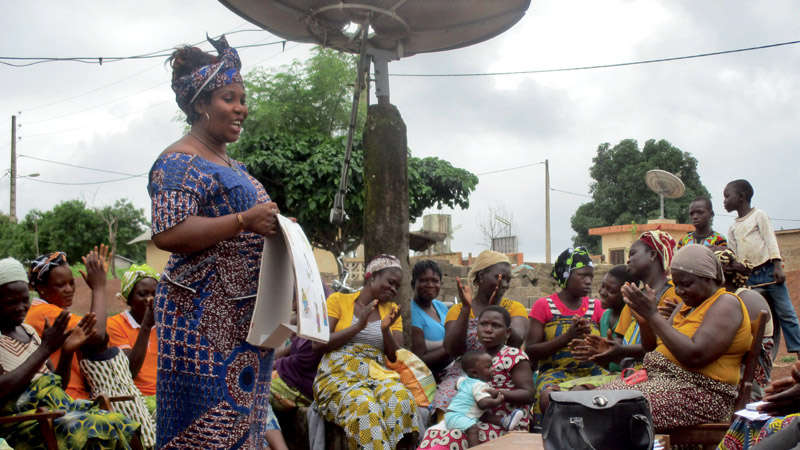
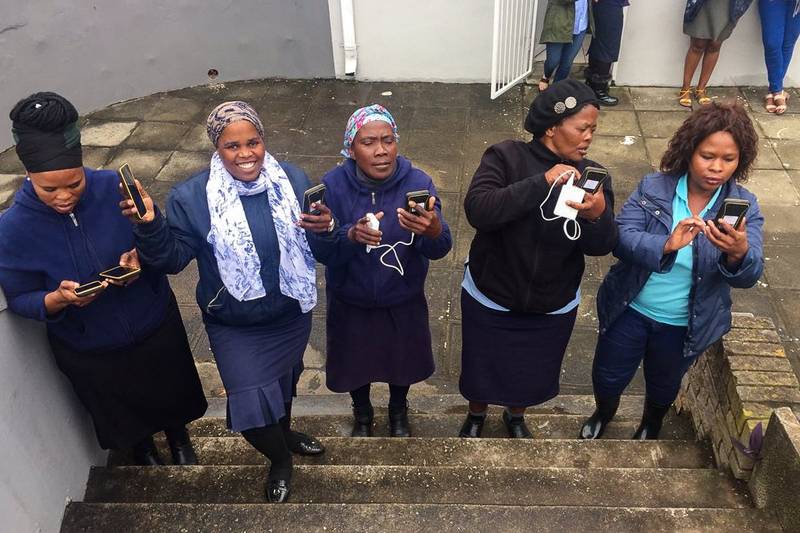
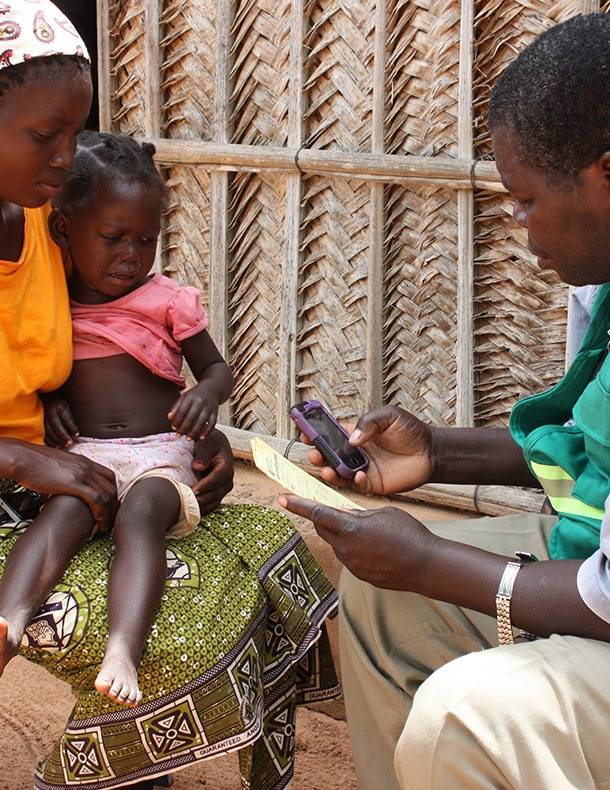
Community health workers in Mozambique, known as Agentes Polivalentes Elementares (APEs), are elected members of remote communities who are trained to provide basic healthcare. They conduct health-promotion activities and provide Integrated Community Case Management (iCCM) for malaria, pneumonia, and diarrhea for children aged 2 to 59 months. In 2016, Malaria Consortium and Dimagi built an application called upSCALE on CommCare to support the APEs delivering their work, collecting and aggregating data from the different program activities. When the Mozambican Ministry of Health selected a District Health Information Software 2 (DHIS2) platform to collect community-level data sets and aggregate them into a set of national health indicators, Dimagi and Malaria Consortium adapted the upSCALE application with a complete integration with the new platform.
CommCare’s interoperability with DHIS2 opens up the possibility of Dimagi’s systems to take advantage of the widely deployed reporting system that is currently used in more than 40 countries, including on a national level in countries such as Kenya, Tanzania, Uganda, Rwanda, Ghana, Liberia, Bangladesh, and Mozambique.
The problem: data trapped in disconnected systems
Interoperable data systems, or different data systems that can communicate and exchange data with each other, have been proven to improve the continuity of care, and with it, the chances of positive health outcomes. Unfortunately, as the prevalence of health information systems has grown, so too has the complexity of the data they carry. The lack of interoperability in these systems has, in turn, led to increased costs, error rates, and knowledge mismanagement.
Mozambique’s health information system ecosystem is not an exception. Over the course of the implementation of these systems, the data had been collected in different places, on different platforms, and by different teams. On the upSCALE project, the Ministry of Health selected CommCare as the community health platform of choice for the APEs to collect data, but DHIS2 (SIS-MA) was selected to aggregate the data coming from all the community-level programs to report their national health outcomes.
Without a direct connection between these two platforms, data submissions would either have to be duplicated or additional resources would be needed to manually transfer the data from one system to the other. This would have created several challenges such as a delay in data submissions, increased costs due to the additional resources required, and an increase in the risk of data entry errors.
The solution: a two-way connection between CommCare and DHIS2
To avoid the increased costs and error rates associated with two disparate data systems, Malaria Consortium worked with Dimagi to integrate the CommCare-based upSCALE application with DHIS2. This integration allowed the Ministry of Health to create a national dashboard made of community-level data sets, which required the development of new functionality that automatically transfers individual form submissions from CommCare to DHIS2.
This feature meant the Ministry’s Monitoring and Evaluation (M&E) team could visualize data in real time at the district, provincial, and national levels of Mozambique’s health system. As a result, the country’s Ministry of Health now has the ability to view community data in a user-friendly format, supporting data-driven decision making around program investments, surveillance, and national health outcomes.
Dimagi used MOTECH, an open-source platform for managing, integrating, and sharing data between digital systems, as a foundation for this integration. MOTECH provided a robust framework to write new integration adapters between the systems and provided a robust infrastructure for authentication, logging, error-handling, and managing connections to partially offline systems. As part of the solution, Dimagi developed new technical features in CommCare to accommodate the two-way communication:
- An integration workflow compliant with DHIS2 requirements of data forwarding and property mapping.
- Data forwarding of forms to DHIS2 anonymous events.
- Metadata integration, including form questions, organization units, and other useful information.
Data that flows from the worker to the nation
Community-level data sets are often ignored and deprioritized within national data initiatives. The MOTECH system provides a full user interface to support CommCare to DHIS2 integration, allowing users to push aggregated community-level data from CommCare to DHIS2 on a configurable schedule, such as monthly or quarterly. Users employ the CommCare report builder to aggregate the data in CommCare and configure the mapping to DHIS2 via a user interface. In this case, the most important indicators were selected from the data and sent to a DHIS2 database used for analytics and reporting. Each data point is updated at the time of collection, allowing for more flexible and detailed reports. The data is visualized and consumed at different levels:
- Worker level: An APE can see a summary of the activities they perform each month, giving them a sense of their performance, all within the same application they use to perform those activities.
- Health facility level: The APE’s supervisor, who normally works at the facility level, can see each APE’s performance as well as the stock levels for each medication. Because most supervisors work at the facility level and have access to a laptop or a more advanced phone, they can make use of built-in and custom performance reports and cross-reference data.
- Province level: All of this data is sent to the same DHIS2 instance, allowing the M&E team at the province level to access reports automatically and use more advanced data visualization resources in the form of maps and graphs. In the past, each facility would have had to report manually by typing each item from the application into the registry and sending it to the M&E team at the end of the month.
The CommCare to DHIS2 integration is built upon CommCare data forwarding, which allows data to be transferred quasi-live to DHIS2 after being processed and mapped in CommCare. All of this data is used to control the epidemiology of diseases in the community, especially malaria, tuberculosis, and diarrhea. The M&E team is able to communicate back to the facility-level teams so that APEs can adapt their efforts to inform the community about how to adhere to habits and behaviors that can prevent the spread of disease.
As stated by UNICEF in their 2017 report, the program contributed to health care services being provided to 29,402 children under five and to 3,110 pregnant women.
Implementation and scale
In Mozambique, Community Health Workers known as Agentes Polivalentes Elementares provide community-based care. Malaria Consortium, in collaboration with UNICEF, has supported the Ministry of Health on the APE program since 2010, including major technical contributions to curriculum and tools development, direct implementation, operational research, and financial support in different provinces in the country.
Initially launched as a program in 2009 called “inSCALE,” the program began growing to its current scale under the “upSCALE” initiative in 2016. Like its predecessor, inSCALE used a “Training of Trainer” approach to prepare staff for the training of provincial health workers at different levels in the province, increasing program ownership and sustainability. These trainers trained a total of 132 APEs and 47 supervisors in the first implementation phase, and the upSCALE program has expanded to more than 1,200 APEs and 300 supervisors since. The program is now in the process of expanding nationally to 8,000 APEs.
The integration between CommCare and DHIS2 using MOTECH is currently being used by Malaria Consortium and the Ministry of Health in Mozambique to aggregate data collected by APEs at the community level to support a wide range of services such as pregnancies, vaccinations, nutrition, and family planning, in three provinces of Mozambique and covering a total of more than 1,000 users. upSCALE plans to expand nationally to cover and aggregate activity indicators across all provinces of the country and support the work of about 8,000 APEs so their communities can receive the appropriate health services.
Impact
The existing platform that is used in three provinces in the country is using aggregated community-level data to support the informed decision making of more than 1,000 APEs and 300 supervisors. The new CommCare and DHIS2 integration enables the Ministry of Health to make data-driven decisions to improve health outcomes at the district, provincial, and national level, as the data collected from each community is fed back to it in the form of improved and tailored services.
As a result of this project, and as stated by UNICEF in their 2017 report, this has contributed to health care services being provided to 29,402 children under five years and to 3,110 pregnant women. In total, 106,816 consultations in communities took place with direct support of the program.
Further, the CommCare and DHIS2 integration born from this program will, in the future, allow CommCare-based programs to be integrated into a system that is currently deployed in more than 40 countries. The hope is that this will help more and more organizations around the world recognize and maximize the utility of their community-level data sets, especially when it comes to national-scale programs.
Building a program of your own?
Talk to our team about how CommCare can equip community health workers and connect their data to the systems that plan care.
Get in touch