In this post
For 35 years, the nonprofit MHP Salud has run Community Health Worker (CHW) programs for underserved Latino communities across the United States. From case management for older adults to help navigating the Health Insurance Marketplace, MHP Salud supports more than 5,000 Latino Americans each year. The challenge was connecting all of that work, so a single participant’s needs could be seen as a whole.
Serving communities the system overlooks
The communities MHP Salud serves are often rural, primarily Spanish-speaking, and burdened by existing health disparities and environmental barriers. In 2018, about 80% of the participants MHP Salud served reported an annual household income below $25,000, and over half were uninsured when they enrolled. The existing health infrastructure is difficult for these communities to access, and difficult to navigate once they do.
In trying to overcome those barriers, participants were often enrolled in multiple initiatives at once, with no way for CHWs and program managers to keep track of every service a person was receiving. At any given moment, someone could be getting information about domestic violence from one CHW and diabetes management support from another, with nothing connecting the two efforts.
One CommCare app for every program and every participant
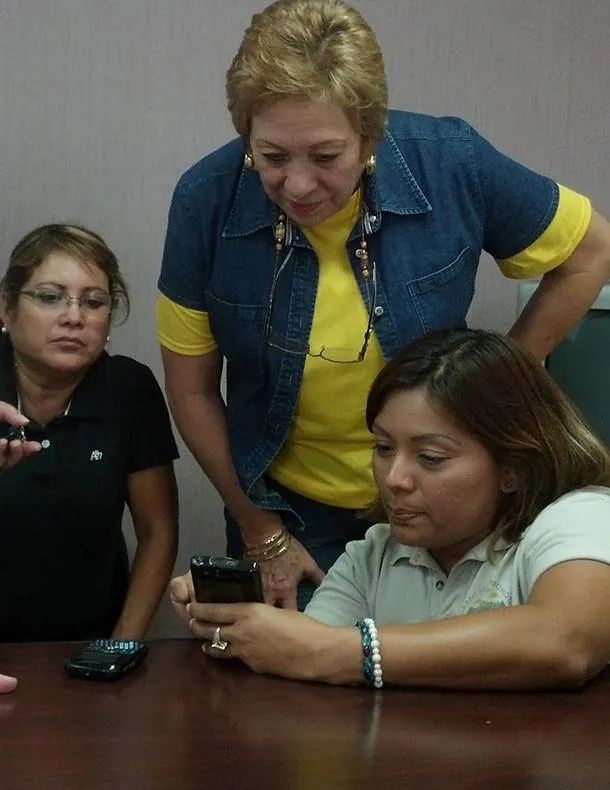
MHP Salud partnered with Dimagi to build a mobile app that unifies its CHW programs and makes them faster and more accurate. The application registers community members in MHP Salud’s system, leads CHWs through the correct forms, and tracks participants across initiatives. CHWs can complete any form in CommCare with or without an internet connection, which matters because some initiatives run in rural areas where connectivity is not guaranteed.
Every CHW in the app participates in case sharing. While one CHW initially serves and registers a participant, any other CHW who interacts with that same person can update their case. CHWs also use CommCare to record referrals to community resources and help with public-benefit applications, along with the results of those referrals on follow-up.
In 2019, MHP Salud added CommCare’s child case feature to track application assistance and resource referrals more precisely. When a CHW registers a case and then refers that person for additional services, each referral generates its own sub-case, so the CHW can review every pending referral separately. To keep follow-up on track, the team built an automatic conditional alert that reminds CHWs about each referral after 15 days.
From 10 separate apps to one unified platform
Because of how the project is funded, MHP Salud first implemented CommCare by building a separate application for each health initiative. In a typical year, roughly 10 different grant-funded initiatives operated across multiple states, each addressing a different health topic with its own team of CHWs and its own CommCare app.
The move to CommCare immediately cut the time CHWs spent filling out forms and submitting data, but it still left no way to track participants receiving multiple services across initiatives. So in 2017, MHP Salud translated the individual applications into a set of forms under one umbrella app. Using CommCare’s case management features, CHWs now register participants once and simply select the right follow-up forms for the initiatives a participant is enrolled in.
89% less time on forms, more time with patients
The shift to a single, integrated app transformed MHP Salud’s day-to-day work. By consolidating its programs onto CommCare, the organization achieved:
- An 89% decrease in time spent filling out and submitting forms.
- More than $14,000 saved annually from reduced form-filling time alone.
- 25 CHWs now using smartphones as an integral part of their daily workflow.
- 5,000+ Latino Americans supported each year across MHP Salud’s health programs.
“At MHP Salud, we’ve shifted from being project-based to a sustainable service delivery model, focused on long-term impact and stability. By integrating technology like CommCare and Tableau dashboards, our community health workers now have real-time access to their goals and client outcomes, empowering them to deliver more effective, data-driven services every day.”
Dr. Maggie Dante, CEO, MHP Salud
Easier mobile forms cut data submission time by 89%, saving MHP Salud more than $14,000 a year and giving CHWs that time back to spend serving their communities.
The gains went beyond efficiency. When the program launched, only two CHWs had smartphones. Those who had never used one quickly became experts and helped train their teams, and today all 25 CHWs rely on smartphones in their daily work. With less time spent on paperwork, CHWs could offer more extensive service, and program managers who once typed paper forms into spreadsheets could focus on monitoring data and analyzing outcomes instead.
Most importantly, CommCare’s case management gave MHP Salud a clearer view of every service and referral each participant receives, and of how those services work together to improve health outcomes.
“The CommCare app allows me to be more efficient in keeping track of our clients in order to provide quality service. CHWs can collect information on community needs and how the CHW can assist, for example, with applying for benefits or referrals to agencies such as food banks and clinics for families with no insurance.”
Linda Medrano, Promotora de Salud, MHP Salud
Running multiple health initiatives?
Talk to our team about how CommCare’s case management can consolidate your programs and give your frontline workers more time with the people they serve.
Get in touch