In this post
Volunteers of America is one of the nation’s largest and most established human services organizations, reaching more than 2 million people annually across 47 states, Washington, D.C., and Puerto Rico. With a mission rooted in supporting the most vulnerable, we deliver critical services in housing, behavioral health, reentry, and social support, often serving individuals facing complex, overlapping barriers to care.
A key component of our work is Volunteers of America’s growing Community Health Worker workforce. Often recruited from the very communities they serve, community health workers are uniquely positioned to build trust, navigate local systems, and advocate for client needs that extend far beyond the walls of a clinic. From securing stable housing to accessing food assistance and health coverage, community health workers act as vital bridges between underserved populations and the services that support long-term well-being.
Yet despite their critical role, many community health workers lack access to the tools needed to efficiently track client progress, coordinate referrals, and demonstrate outcomes. That’s why Volunteers of America partnered with Dimagi, to close this gap and equip our community health worker workforce with a robust, low-code case management platform built on CommCare. This collaboration is designed to strengthen our ability to address Social Determinants of Health for vulnerable populations at scale while ensuring that community health workers can focus more on client engagement and less on administrative burden.
Addressing the root causes of health disparities with the community health worker model
Access to healthcare is about more than just doctor’s visits; it’s about addressing the everyday challenges that prevent people from staying engaged in their care. For many, challenges like unstable housing, food insecurity, lack of reliable transportation, and limited health literacy can prevent even the most basic access to services. Traditional healthcare systems are often ill-equipped to address these deeply rooted social and structural barriers.
This is where community health workers play a transformative role. As trusted members of the communities they serve, community health workers provide culturally responsive support, help clients navigate complex social and healthcare systems, connect to critical services, and advocate for their needs in ways that traditional providers often cannot.
At Volunteers of America, we’re leveraging community health workers as a key solution to addressing Social Determinants of Health, and other non-medical factors that profoundly shape health outcomes. With a focus on behavioral health, housing, and wraparound social services, we empower community health workers to support individuals facing compounding vulnerabilities. Now, with support from Public Health AmeriCorps, we’re expanding our community health worker workforce and investing in digital tools that enhance care coordination, streamline service delivery, and amplify the impact of our field teams.
The communities we serve face some of the most persistent barriers to care:
- Unstable housing: without secure shelter, clients struggle to maintain health routines, store medications, or attend follow-up appointments.
- Food insecurity: limited access to nutritious food exacerbates chronic conditions and undermines overall well-being.
- Transportation gaps: many clients live in areas with limited access to reliable transit, making it difficult to access care or fill prescriptions.
- Health literacy: understanding treatment plans, insurance paperwork, and social services can be overwhelming without guidance.
As we scaled our community health worker program with support from a Public Health AmeriCorps grant, we faced a critical operational hurdle: our legacy case management system carried high recurring costs and was ill-suited to the needs of a mobile, non-technical workforce. To ensure long-term sustainability and better support for frontline teams, we sought a modern, user-centered digital solution.
Transforming service delivery through digital enablement
With a growing community health worker workforce embedded directly in communities across the country, we’re reimagining how care and support are delivered to those facing complex health and social needs. As part of our Public Health AmeriCorps-funded expansion, we recognized the need for a digital infrastructure that could adapt to local contexts, reduce administrative overhead, and support real-time coordination among field staff.
To meet this need, we partnered with Dimagi to implement CommCare, a HIPAA-compliant, low-code case management platform built specifically for frontline teams.
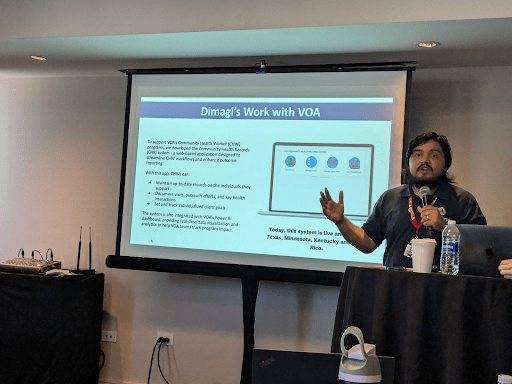
Across Puerto Rico, Minnesota, Texas, and Kentucky, community health workers now work from a single mobile case management system built for high-need, fast-paced settings.
This solution has enabled 30 community health workers across Puerto Rico, Minnesota, Texas, and Kentucky to:
- Securely record demographic, medical history, and service needs.
- Complete structured assessments related to social drivers of health, such as housing stability, food access, transportation availability, behavioral health needs, and social connectedness.
- Track client goals, interventions, and follow-ups.
- Generate real-time reports and integrate with Volunteers of America’s PowerBI system for deeper insights.
This digital solution is designed to meet the realities of community health worker work in fast-paced, high-need settings. With CommCare’s intuitive, mobile-friendly interface, community health workers can efficiently document and access client information in the field, no technical background required. By streamlining data entry and reducing administrative overhead, the platform enables community health workers to devote more time to what matters most: building relationships, coordinating care, and advocating for the people we serve.
The implementation followed a focused three-month timeline, designed to ensure the system was responsive to community health worker needs and grounded in real-world use. Key phases included:
- User interviews and discovery to align the system with community health worker needs.
- Configuration and testing of a Minimum Viable Product.
- Training and onboarding support to ensure a seamless rollout.
- Post-live stabilization and refinement based on user feedback.
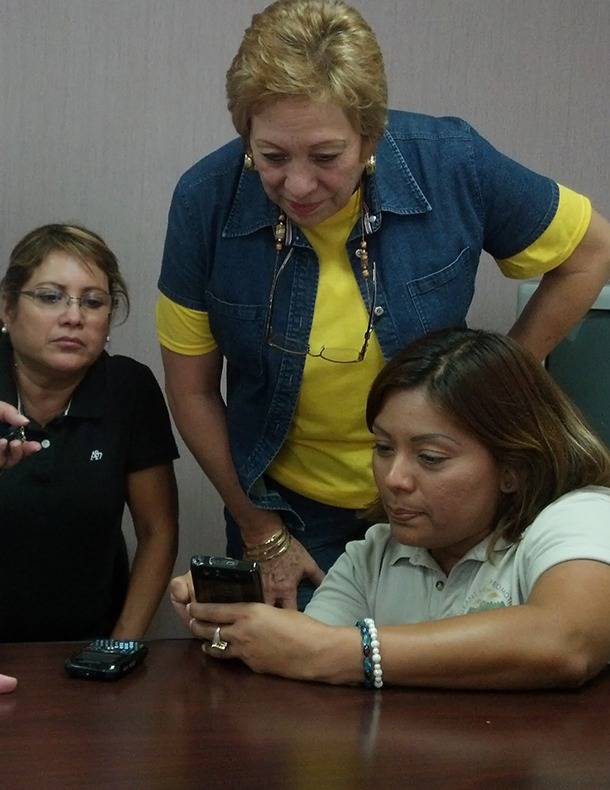
Several community health workers from Puerto Rico shared that the system is easy to use, intuitive, and helps them stay on top of their clients’ progress and goals. This frontline perspective echoes the sentiment shared by Alberto Maldonado, Regional Director at Volunteers of America Puerto Rico, who emphasized the importance of data systems in a recent LinkedIn post:
“In my line of work, I don’t just collaborate with frontline staff, I also focus on connecting services with providers and people, ensuring that all stakeholders are aligned, needs are met, and goals are achieved. Strengthening data collection systems is key to delivering quality, sustainable community services.”
Alberto Maldonado, Regional Director, Volunteers of America Puerto Rico
Charting the future of community health worker programs
Even as we expand our community health worker program’s reach and impact, broader systemic challenges persist. Community health worker programs across the country continue to face high turnover, fragmented funding streams, and limited access to sustainable reimbursement mechanisms through public and private insurance, barriers that threaten the long-term viability of community-based care models.
While technology is a powerful enabler, addressing the broader challenges facing community health worker programs will require a multifaceted approach, one that includes continued investment, supportive policy frameworks, and collaboration across sectors. Through our partnership with Public Health AmeriCorps, we’re not only strengthening our own community health worker infrastructure but also contributing to the growing recognition of community health workers as essential partners in advancing health equity, prevention, and community-centered care.
As part of this effort, Volunteers of America and Dimagi are committed to sharing learnings with the broader field, co-presenting at industry conferences and public health forums, engaging in peer learning networks, and sharing insights on how digital tools can extend community health worker capacity, strengthen data-driven decision-making, and support community impact.
With continued momentum, community health worker programs like ours offer a compelling model for transforming health systems from the ground up, one that honors lived experience, prioritizes relationships, and ensures that the path to better health is rooted in the realities of everyday life.
Strengthening frontline care in the US?
Learn how Dimagi helps organizations equip community health workers with modern case management tools.
Get in touch