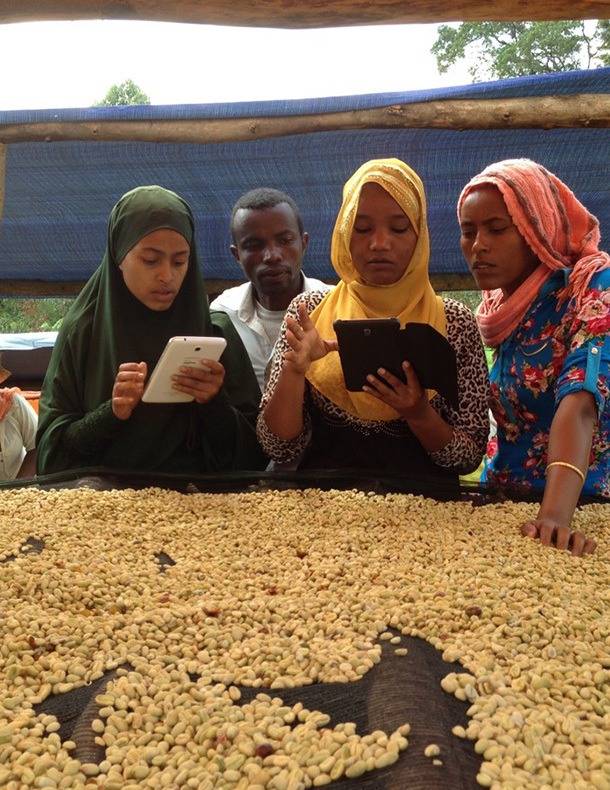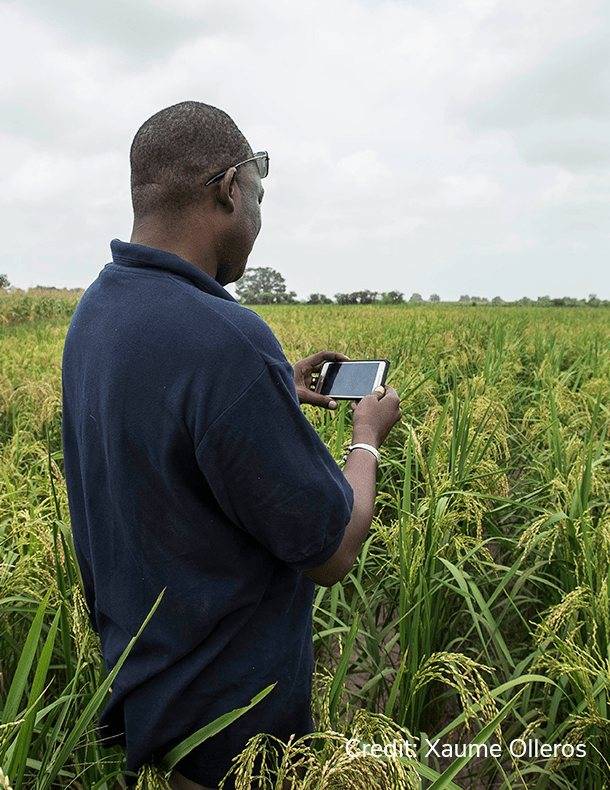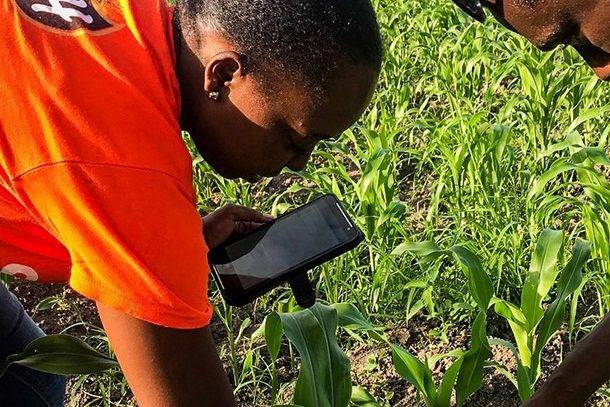
In 2013, the Brasserie Nationale d’Haïti (BRANA, a Heineken subsidiary) started the Smallholder Alliance for Sorghum in Haiti (SMASH) program to build and reinforce a local sorghum supply chain. In support, they developed SMASH Mobil, an integrated mobile technology and reporting system, to mitigate the discrepancy between what was happening in the field and what was being reported, and to support key monitoring and evaluation efforts. The tool, supported by the CommCare platform, runs on Android tablets and helps the program monitor its progress in near real time, from land preparation and planting all the way to the delivery of grain to BRANA.
The problem
The Brasserie Nationale d’Haïti (BRANA) is the largest brewery and bottler in Haiti. Until it became a subsidiary of Heineken in 2011, however, it imported 100% of its ingredients. BRANA realized it needed to regain control over its supply chain, and in doing so had an opportunity to help combat Haiti’s very high rates of poverty and unemployment. The United Nations Development Programme estimates that 59% of Haitians live below the poverty line, with 70% of rural communities living on less than $2 per day.
According to World Bank research, agricultural output in Haiti has suffered from a growing population farming a limited area of land, resulting in the division of cultivated land into smaller and smaller plots. In the last decade, 78 percent of Haiti’s farms had an average size of less than two hectares. The report explains that on these tiny farms the soil has become progressively exhausted and less productive, a problem compounded by the extensive deforestation of the country, which in turn has led to severe erosion of the fertile topsoil.
The solution
SMASH set out to achieve three goals for smallholder farmers and the local sorghum supply chain:
- Double the sorghum yield of smallholder farmers.
- Increase farmer income from growing sorghum by 75%.
- Create an economical, stable, and durable supply chain of local sorghum for commercial buyers.
App overview
In 2016, SMASH partnered with RTI International and Dimagi to develop SMASH Mobil, an integrated mobile technology and reporting system to support actors across the supply chain. The objective was to mitigate the discrepancy between what was happening in the field and what was being reported, and to support key monitoring and evaluation efforts. Today, SMASH Mobil is actually a suite of mobile applications made up of three main components: Supplier Relationship Management (SRM), Supply Chain Management (SCM), and reporting and visual analytics.
The Supplier Relationship Management (SRM) component tracks information from the moment the supplier is contacted by the field agent, taking into consideration:
- Supplier information management.
- Opportunity management, including field health monitoring, technical advice, and on-field training.
- Contract and production services management.
- Training attendance tracking.
- Demo plot management.
This component also records follow-up field visits and technical support, tracking progress and deficiencies of registered plots to help field agronomists maintain a steady relationship with suppliers by offering ways to monitor their crops and maintain field health. The tool even helps detect crop infestations at an early stage to avoid damage and mitigate the loss of production.
The Supply Chain Management (SCM) component starts right after harvest and is used from purchase from the supplier until delivery to the national grain conditioning center. This portion of the app covers:
- Purchasing on-field and at micro collection centers.
- Contract fulfillment.
- Local and national inventory management.
- Warehousing and storage.
- Transportation logistics.
- Post-harvest quality assurance.
This part of the app is responsible for tracking the amount of sorghum harvested, the balance to be paid to the supplier, and the logistics data from the time of purchase to the delivery of the final product to BRANA. Between SRM and SCM, the SMASH Mobil application tracks the entire sorghum life cycle, from its planting at the farm all the way to BRANA’s brew house.
Finally, the reporting and visual analytics portion of the application aggregates the data and supports monitoring and evaluation with an interactive Tableau dashboard and CommCare’s built-in reports. The real-time presentation of data allows supervisors, program management, and shareholders to monitor the progress of the team in the field. Data collected by mobile users is transferred in almost real time to this dashboard for visualization.
Implementation
To ensure smooth adoption of the app, SMASH built a few support resources. The first was a workflow tool to visualize and describe the flow of information throughout the various modules, giving new users a quick glimpse of how to navigate the application for a specific task. Next, a quick-start guide presented users with a step-by-step process on how to navigate through the modules and forms, which proved very helpful for new and intermediate users.
The implementation team set up training sessions to lead workers through the app, mirrored on a screen for the whole group to follow. As new users navigated the app themselves, they could follow the flows in real time, pausing the presentation at any time to ask questions. Regular practical training sessions were also held with new users to guide and support them through the process. Working directly with mobile users in the field while providing guidance was a key part of the rollout, and the on-site assistance, where immediate support was provided to tackle unanticipated issues, was the key to the rollout’s success.
Impact
Since the program began in 2013, SMASH has trained 7,104 smallholder farmers in improved sorghum production, 2,918 of whom are now applying new technologies. These farmers have seen an increase of 57% in yields and 78% in revenue from sorghum. Close to 250 farmers have also received training in business and financial concepts to teach them how to turn their small-scale agricultural production into a viable business.
Since 2013, SMASH has trained 7,104 smallholder farmers in improved sorghum production, with farmers seeing a 57% increase in yields and a 78% increase in revenue from sorghum.
Introducing SMASH Mobil has had a positive impact on several levels, including a drastic cut in time spent on filling out paper reports, from 30 minutes to under 3 minutes per form. That means SMASH agronomists and field agents can focus on training and supporting farmers, ensuring the production of high-quality sorghum grain. Thanks to SMASH Mobil, the actions in the field and management in the central office have come much closer together, and data-driven decision-making went from an almost foreign concept to an everyday reality.
Building a supply chain with smallholders?
Talk to our team about tracking agricultural value chains end to end with CommCare.
Get in touch