In this post
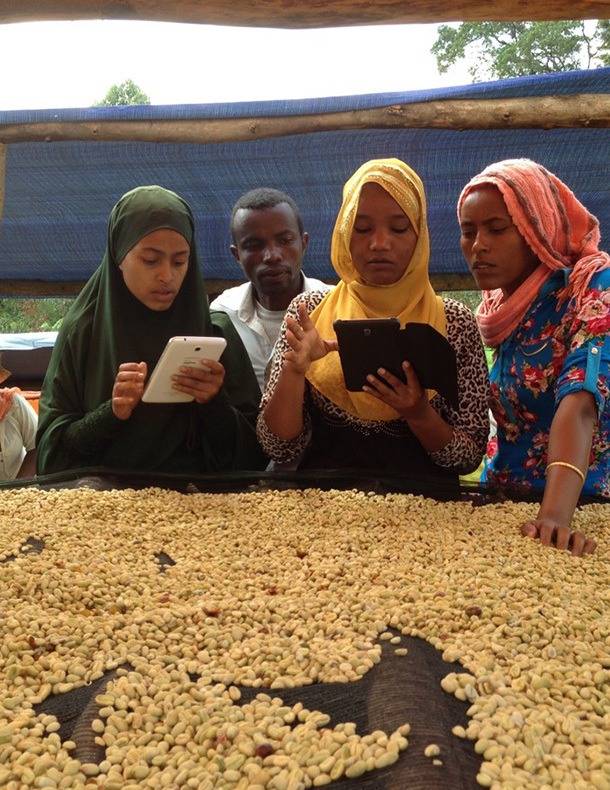
Naatal Mbay, which means “making agriculture prosperous,” is a Feed the Future project that uses digital tools to empower farmer-serving organizations active in the rice, maize, and millet value chains in Senegal. The program uses CommCare to support locally owned and sustainable data collection by tracking inputs and productivity, managing loans, and collecting rainfall data, while increasing transparency along the chain and attracting investment. CommAgri, Naatal Mbay’s digital tool, is used by 55 cooperatives and more than 400 extension agents, who have registered 68,000 farmers.
Overview
Naatal Mbay is implemented by RTI International with Feed the Future and the United States Agency for International Development (USAID), and operates in the Senegal River Valley and the South Forest Zone of Senegal. It works across agricultural cooperatives and agricultural logistics, and uses CommCare features including Case Management, CommCare Supply, and Area Mapper. The CommAgri solution is used by 434 agriculture extension agents.
The problem
Small-scale farmers in Senegal face many obstacles that larger agricultural organizations do not have to worry about. When they apply for loans, they know they must provide details about their farms, but few have accurate data about their farming activities or the tools to make decisions using the data they have. With inaccurate information, they will also often over- or underestimate the size of their plots, meaning that they apply either too little fertilizer or pay for too much. In 2016, the rains came late to the Sahel, spreading doubt among farmers about when to plant. Some farmers planted in the dry earth when the rains should have started, while others waited until the rains started, hoping they could still harvest in time. All farmers took a risk not knowing how the timing of their planting would affect their harvests.
At the end of the season, it can also be difficult for farmer cooperatives to estimate cumulative harvest yields or track the reimbursement of loans for members under contract. Buyers and banks consider them unreliable partners due to their historical inaccuracy and inability to manage deliveries and loans. As a result, it also tends to be difficult for small farmers to sign up in time for much-needed agriculture insurance.
The solution
Naatal Mbay seeks to strengthen the production, financing, processing, insurance, and marketing aspects of cereal value chains in the Senegal River Valley and the South Forest Zone of Senegal by shifting the responsibility and ownership of data collection and analysis to the stakeholders who stand to gain the most from it: the local farming cooperatives. The project establishes behaviors, practices, and systems that are locally owned and managed, with a strong emphasis on sustainability, working proactively in its problem-solving.
In response to uncertainty around plot size, the application adopted enhanced Global Positioning System (GPS) functionality. With accurate measurements, some farmers will buy fewer inputs, while others may buy more; however, nearly all participants ultimately saw an increase in productivity. All of these data are also used in the application for loans, so Naatal Mbay’s approach helps improve not only the productivity of farmers but their opportunity to invest in their future as well. In order to protect those futures, detailed member listings can be transmitted to insurance companies to accelerate the registration of small-scale farmers to insurance programs and manage payouts promptly in case of a drought. Accurate harvest estimates enable the organizations to manage contracts with buyers and enforce strict loan reimbursement practices by their members, building creditworthiness.
The CommAgri app
CommAgri is a CommCare-based mobile solution that replaced Naatal Mbay’s paper-based data collection systems. The app facilitates the management of producers, season activities, crop monitoring, harvest and yield assessments, and quality control data. Modules support credit and inventory tracking, as well as sales and client management, automatically providing the real-time production statistics and financial health of each network.
Feature highlights
The Credit Module. CommAgri’s credit module allows the managers of the cooperative to collect information about the farmers’ needs in terms of inputs before the start of the season. The application thus allows the managers to aggregate information on input needs for the cooperative, which is used for their loan applications to banks and to place collective orders with their input suppliers. If a loan is granted to the cooperative, the managers will also use the application for the distribution of microloans to the farmers. The reimbursement of those microloans is also monitored within the application, allowing the cooperative and the banks to have visibility into each farmer’s individual information, including:
- The farmer’s declared input needs.
- The amount lent by the cooperative to the farmer.
- The reimbursement of the loan granted.
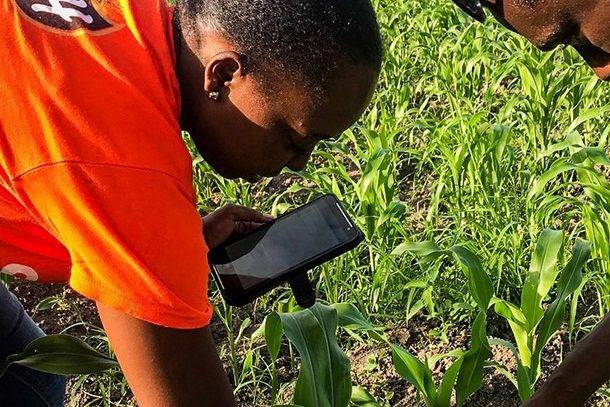
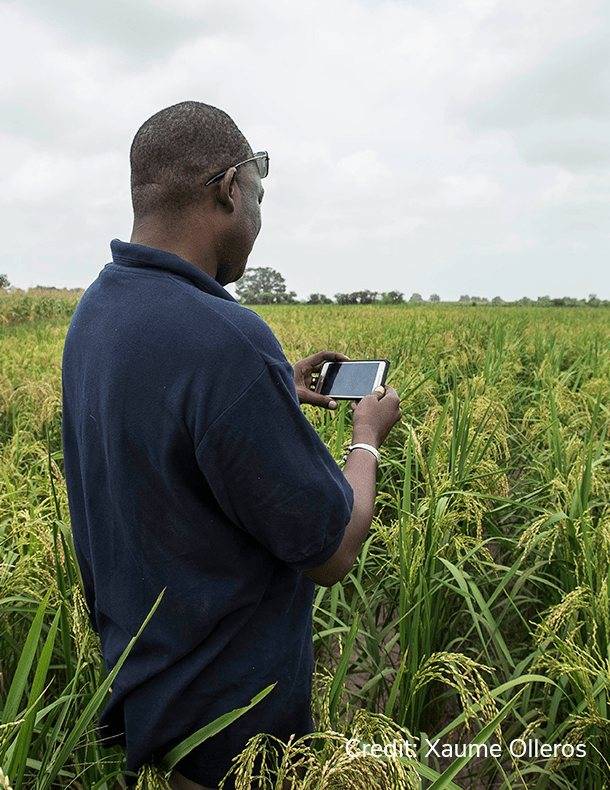
The Area Mapper. When they meet with a farmer, field agents ask for an initial estimate of the area each plot covers, but these estimates are not always reliable. CommAgri features an Area Mapper tool that allows the field agent to walk the perimeter of the farmer’s plot of land, automatically capturing the area of that plot in the process. The Area Mapper allows the cooperative to confirm the area of each farmer’s plot, capturing more precise information for input (for example, fertilizer) purchases and loan allocations.
“I used to think that the computers were something that only the people in offices used. They were not something that farmers could use. But these tools are important [for us] because they help the farmers understand the size of their plots. And with GPS, farmers know precisely how much seed and inputs to apply and they can better understand performance. Before we didn’t have context for [understanding] our performance.”
Leader from Mabo, a millet group in the Kaolack region of Senegal
Implementation and scale
The CommAgri mobile solution has scaled up since its launch in 2014, where it began as a pilot at one cooperative whose three extension agents used the application to register 420 farmers. CommCare’s mobile and web-based platform meant that Naatal Mbay could expand slowly, and over the course of a series of pilots, adjustments could be made based on what Dimagi learned from users. In 2016, the application was updated and scaled to 20 cooperatives, two additional value chains, and 80 extension workers registering 7,298 farmers. Today, the system is used by 55 cooperatives and 434 extension agents, and has registered about 68,000 farmers. It has also added functionality, such as enhanced GPS tracking technology and other platform integrations.
To ensure cooperatives have easily accessible frontline information technology support for their CommAgri solution, Dimagi also trained two Senegalese firms based near the intervention zones to provide tier 1 frontline technical troubleshooting and support directly to the cooperatives and their field agents. They are also trained in building and modifying the CommCare application and building reports. RTI and Dimagi also tested innovative payment models in order to ensure sustainable ownership of CommAgri beyond the life of the project. In the first phase, trimestrial payment collection came directly from cooperatives for access to and use of the mobile application, with zero to no default rates during the project duration.
Impact
CommAgri helped Feed the Future Senegal toward its goals of improving service and providing coverage for more than 150,000 farming households (50% of the project coverage area) to access cereal and seed markets:
- Achieved household coverage goals. CommAgri helped Feed the Future Senegal reach 68,000 farmers, accounting for half of the program’s total goal.
- Improved productivity of farmers. The introduction of the CommAgri solution led to a 161% increase in maize yields and a 73% increase in millet yields for 25,000 farmers across the country.
- Award-winning service. The approach earned a Data to Action Recognition Award by the U.S. Global Development Lab within USAID in 2014, acknowledging the project’s modest yet effective way of incorporating data innovations to increase impact.
- Improved access to loans. The cloud-based monitoring tool accelerated the loan approval process for the rainy season, which meant that some farmers could plant two seasons of rice. In 2016, the portfolio for rainy season loans totaled $12.1 million.
CommAgri, built on CommCare, helped Feed the Future Senegal reach 68,000 farmers, accounting for half of the program’s total goal, and led to a 161% increase in maize yields and a 73% increase in millet yields for 25,000 farmers.
Running an agricultural program like this?
Talk to our team about how CommCare can support extension agents, cooperatives, and smallholder farmers, even where connectivity is limited.
Get in touch