In this post
A new USAID Advancing Nutrition report features CommCare-supported projects in Africa, South America, and Asia.
Last year, we shared the stories of a couple of CommCare-supported projects aiming to tackle the second of the United Nations’ Sustainable Development Goals: Zero Hunger.
All together, these CommCare-supported projects are able to register 1 in every 20 malnourished children around the world for services.
Together, these CommCare-supported projects are able to register 1 in every 20 malnourished children around the world for services.
A report on digital tools for nutrition
Last month, USAID’s Advancing Nutrition project released a comprehensive report on the use of digital tools to support nutrition programs: “Using Digital Tools to Strengthen Nutrition Service Delivery.”
The report explains that in order “to avoid duplication of effort, learn from successful implementations, and guide future work, it is important to understand what tools have already been designed, developed, tested, and taken to scale.”
Among those tools is CommCare, used in 16 of the report’s reviewed projects, nearly three times as often as the next most used platform.
CommCare was used in 16 of the report’s reviewed projects, nearly three times as often as the next most used platform.
Community health worker-led projects
The report highlights a number of these projects, including ICDS-CAS, the electronic Community Health Information System (eCHIS), and upSCALE, all community health worker-led initiatives: “That a majority of the tools are being used by community health workers reflects the reality that nutrition services are typically provided at the community level, but reaching community-level cadres with mobile devices, and ensuring adequate training and supervision at scale, involve unique challenges.”
To learn more about the unique challenges of community health worker programs and how mobile tools can be used to mitigate them, read our guide to effective community health worker programs.
Toward a shared nutrition solution
The report also mentioned two other programs: Terre des hommes’ Integrated e-Diagnostic Approach (IeDA) in Burkina Faso and World Vision’s Community Management of Acute Malnutrition (CMAM) application in the Middle East and West Africa. These partners are now working on sharing workflows between their projects with the goal of building a common digital health solution that integrates the best parts of both protocols. The feasibility of the integrated app, trends in user acceptability, treatment protocol adherence, and CMAM treatment outcomes will all be examined in the upcoming pilot.
The CMAM application plots a patient’s progress against a growth chart based on the data collected.
The Alliance for Integrated e-Diagnostic (ALeDIA) digital health consortium members, which includes both World Vision and Terre des hommes, along with Action Against Hunger, are currently prioritizing Sahelian countries with a high burden of childhood infections and acute malnutrition.
Beyond the report
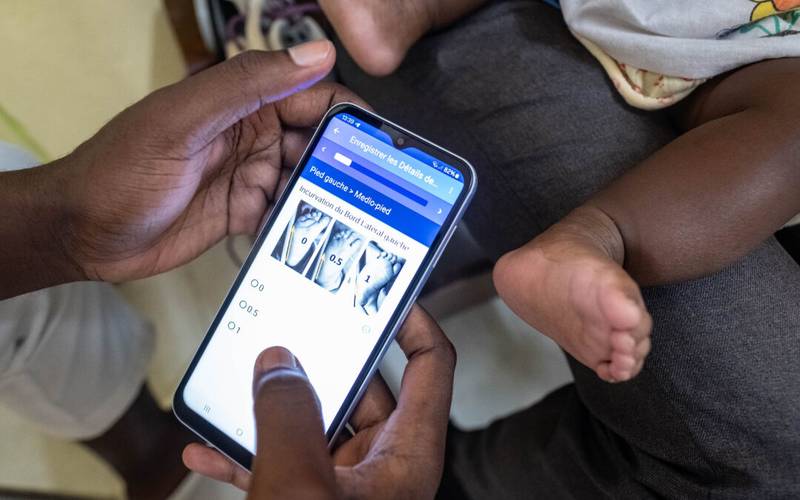
Beyond the projects mentioned in the report, however, other organizations have implemented CommCare applications for nutrition programs on their own. Madagascar’s Office for National Nutrition (ONN) developed their own application for malnutrition management and scaled it to 500 health workers. They will soon be looking to integrate these services and features into their more widely used and USAID-funded ACCESS application.
“Dimagi’s CommCare platform was the platform most commonly used for nutrition-related digital interventions. This wide use merits further investigation to see whether features of this platform are better designed for nutrition activities in particular.”
USAID Advancing Nutrition
Near the end of the report, the USAID Advancing Nutrition team noted this point, and we’re looking forward to such an investigation.
To read the report in its entirety, read the full report. ICTworks also shared a piece on the report.
Have a nutrition program in mind?
Talk with our team about building mobile tools to strengthen nutrition service delivery.
Get in touch