In this post
A purpose-built electronic medical record (EMR) for non-communicable diseases (NCDs), integrated with CommCare, was evaluated in Kenya’s Hagadera refugee camp and compared against a general EMR system. The specialized application markedly improved how consistently chronic-disease care was documented and followed up.
The problem: chronic disease care in humanitarian settings
An estimated 41 million deaths a year are caused by non-communicable diseases, accounting for 71% of global mortality, and 85% of premature NCD deaths among adults aged 30 to 69 years occur in low- and middle-income countries. Historically, humanitarian health interventions have not focused on NCDs. The need for NCD prevention and control in humanitarian emergencies is well recognized, but little evidence guides operational strategy, so the delivery of NCD care varies widely. Mobile health interventions have the potential to overcome the infrastructure, human-resource, and access limitations of conflict-affected settings.
The setting: Hagadera in the Dadaab complex
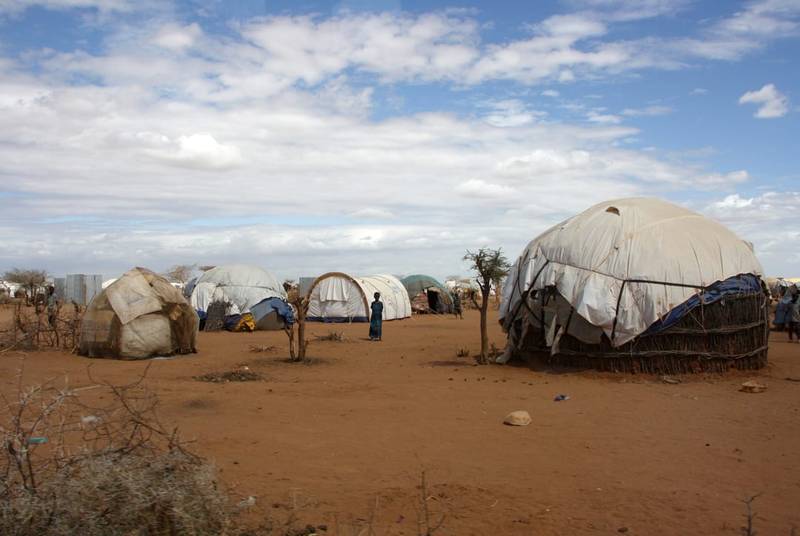
The study ran for 11 months, from May 1, 2021 to March 31, 2022, in the Hagadera refugee camp, part of Kenya’s Dadaab complex, which hosts more than 215,000 Somali refugees. The evaluation analyzed records from 1,539 patients at the Hagadera NCD clinic. Patients were predominantly female (60.3%, or 928 patients), with a mean age of 53 years (range 6 to 100). Diagnoses were hypertension only (58.3%, or 898 patients), diabetes only (23.2%, or 357 patients), and both conditions (18.5%, or 284 patients). Over the period there were 18,801 total visits, of which 42.1% (7,918) were recorded in the NCD application.
The solution: a fit-for-purpose NCD record on CommCare
The specialized application was Sana.NCD, originally developed by MIT Sana Mobile for Syrian refugees in Lebanon and adapted for Hagadera’s context. It was integrated with CommCare, the platform already used by the International Rescue Committee (IRC). The application provided an abbreviated medical record and a clinical protocol for hypertension and diabetes; a patient-controlled health-record component from the Lebanon version was excluded as not relevant to this stationary camp setting.
How CommCare was used
MIT Sana and Dimagi partnered with the IRC to customize the application to IRC-supported health-facility workflows in Hagadera. Building on CommCare, the platform the IRC already relied on, facilitated adoption and supported future scalability across humanitarian settings; the authors note the application can easily be rolled out in similar settings with minimal adaptation. Providers were trained by Dimagi, followed by a two-week pilot period before formal data collection, with technical support provided throughout implementation.
Impact: more complete records and reliable follow-up
Documentation was markedly more complete with the purpose-built application. Blood pressure was recorded in 100% of records, compared with 75% in the general EMR, and the next-visit date was scheduled in 99.6% of records, compared with just 14.7%, a substantial improvement in the program’s ability to track continuity of care. Other fields followed the same pattern: weight was recorded in 100% of NCD-application records versus 7.4% in the general EMR, and body mass index in 99.4% versus 0%.
The purpose-built NCD application recorded a next-visit date in 99.6% of records, compared with 14.7% in the general EMR, and blood pressure in 100% of records versus 75%.
Providers were satisfied with the application and indicated that it standardized patient information and made consultations easier. There was consensus that access to information from previous consultations was easier when using the application and that this was beneficial for NCD control and follow-up. The study did not produce statistically significant improvements in blood-pressure and blood-sugar control over the 11-month period, which the authors read as a sign that standardized data collection alone is not enough without complementary clinical interventions.
“Most important aspect is the traceability of the data and the way the data is saved and stored. There is no problem if the patient loses their patient’s card or number.”
Clinic provider, Hagadera
For programs delivering chronic-disease care in low-resource and humanitarian settings, the study offers practical evidence that a fit-for-purpose, CommCare-based NCD tool can raise data quality and follow-up reliability well above what a general EMR achieves, an important first step toward improving the quality of care.
Running an NCD or chronic-disease program?
Talk to our team about how CommCare supports hypertension, diabetes, and other chronic-disease care, from screening and follow-up scheduling to continuity of care at the last mile.
Get in touch