In this post
Colorado’s Behavioral Health Administration (BHA) was created to improve coordination across a fragmented behavioral health system and make it easier for Coloradans to access care. As part of that mission, BHA partnered with the Colorado Digital Service and Dimagi to redesign how providers admit individuals into medication-assisted treatment (MAT) programs. The resulting MAT Central Registry gives providers direct access to statewide admission information, helping them connect people to treatment faster while improving safety, coordination, and visibility across Colorado’s behavioral health system.
The problem: treatment delays during a critical moment
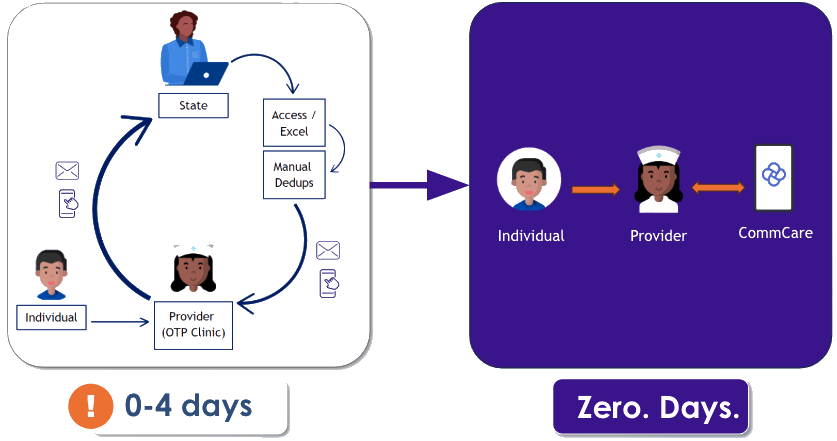
Before the Central Registry, providers had no direct way to determine whether an individual was already enrolled in treatment elsewhere. Because patients should only be actively enrolled in one opioid treatment program at a time, providers had to contact state employees to manually verify enrollment status before admitting a new patient.
State staff often had to reach out to other treatment providers to confirm whether records were current and whether a patient remained enrolled. If the appropriate contact was unavailable or information could not be quickly reconciled, the process could take hours or even days. During that time, individuals seeking treatment were often left waiting while providers attempted to coordinate admission through a fragmented process.
The challenge extended beyond intake. Data was maintained across multiple systems and formats, limiting the state’s ability to understand treatment utilization, monitor retention, identify geographic gaps in access, or use data to inform future planning.
The approach: redesigning the admission workflow
Colorado partnered with Dimagi in 2021 to build the Central Registry around three goals:
- Connect people to treatment faster
- Reduce administrative burden on providers and state staff
- Improve visibility into treatment utilization and outcomes
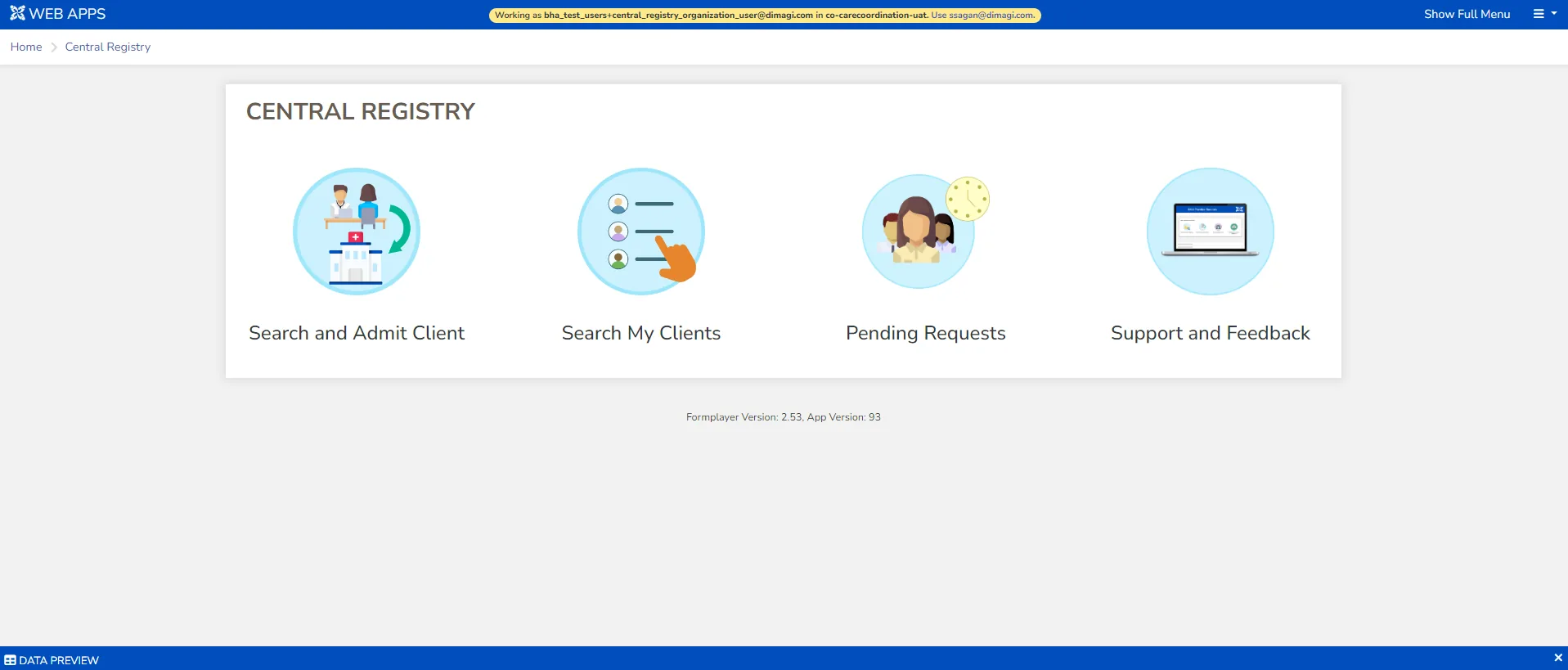
Rather than requiring providers to contact the state for admission verification, BHA created a secure digital registry where providers could search and determine in real time whether someone is already receiving treatment. If the individual is not actively enrolled elsewhere, providers can complete the admission directly within the same workflow.
The system was intentionally designed to be simple and easy to adopt across providers with varying levels of staffing, infrastructure, and technical capacity. Features include guided intake forms, duplicate detection, role-based access, and embedded reporting tools that support both frontline care delivery and statewide oversight.
The results: faster access, less administrative burden
Since implementation in 2022, the Central Registry has supported more than 32,000 admissions into MAT programs across Colorado, including 10,000 active admissions for the first time in the state’s history.
The average intake time is now approximately 2.25 minutes. Prior to implementation, providers often waited hours and sometimes days for state staff to manually verify enrollment status before admitting a patient.
Down from hours and sometimes days while state staff manually verified enrollment status before approving admission.
Today, 97% of admissions are completed directly by providers without requiring state intervention.
The Registry has also improved data quality and patient safety. Automated duplicate detection workflows have identified and resolved more than 6,600 duplicate records, reducing the risk of duplicate enrollment and minimizing the need for manual reconciliation.
Perhaps most importantly, providers can now connect people to treatment while they are actively seeking care, rather than asking them to wait while enrollment status is manually verified.
Beyond admissions: improving retention and planning
As the Registry matured, it became more than an admissions tool. BHA now uses Registry data to better understand treatment retention, utilization patterns, and access to care across the state.
Because the first 90 days of treatment are often the most critical for patient engagement and recovery, the Registry allows the state to monitor length of stay at both the clinic and statewide levels. Colorado has already observed improvements in treatment retention at 30, 60, and 90 days and is gaining new insight into how individuals re-engage with care after leaving treatment.
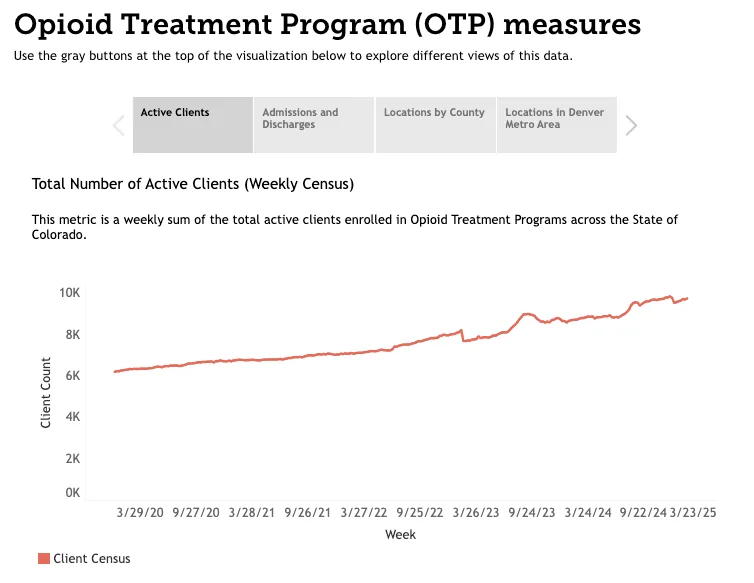
The Registry has also become an important planning tool. Data from the system helped inform Colorado’s expansion of Opioid Treatment Programs from 25 to 52 locations statewide and continues to help BHA identify geographic gaps in access and assess treatment needs across urban, suburban, rural, and resort communities.
Sustainability and what comes next
The Central Registry is now part of Colorado’s ongoing behavioral health operations and continues to support MAT admissions statewide. Because providers can independently verify enrollment and complete admissions directly within the workflow, the state no longer needs to dedicate significant staff time to manually reconciling records and coordinating intake across facilities.
Building on lessons from the Registry, BHA has expanded its behavioral health modernization efforts to include provider directories, bed capacity tracking, referral management, and statewide reporting capabilities. Together, these tools are helping create a more connected and data-informed behavioral health system.
What Colorado learned
One of the clearest lessons from this work is that improving access to care does not always require creating new programs or expanding services. In many cases, barriers exist within the operational processes that connect people to those services.
By reducing administrative friction and giving providers direct access to the information they needed, Colorado was able to improve access to treatment using existing resources. The state continues to share lessons from the project through national presentations, peer learning opportunities, and published case studies to help other states identify similar opportunities to improve access through workflow redesign and better use of data.
Coordinating care across a system of your own?
Talk to our team about how CommCare can centralize fragmented workflows and data to streamline care delivery.
Get in touch