In this post
Suaahara II (SII) is a seven-year, USAID-funded program that uses a household-based approach to improve the nutritional status of pregnant and lactating women and children under two years of age. Building on the learnings from Suaahara I, Suaahara partners have implemented a combination of nutrition-specific and nutrition-sensitive interventions throughout 42 of Nepal’s 77 districts.
The program’s goals are wide-ranging. They include improving the quality and use of maternal and child health and nutrition services; increasing ideal household practices related to health, family planning, nutrition, and water, sanitation, and hygiene; ensuring community access to and consumption of nutritious foods in areas with very poor nutrition indicators; and improving nutrition governance. All SII interventions are based on social and behavior change communication (SBCC) with a focus on gender equity and social inclusion. Digital platforms for data collection, follow-up, and service delivery also support monitoring, evaluation, and research for learning (MERL) practices and continuous program improvement.
The problem
Suaahara I was a five-year, comprehensive community-focused project dedicated to improving the health and nutritional status of pregnant women, new mothers, and children under two years of age. Results from the end of this project revealed that field staff needed more timely, targeted, and actionable data on the needs of households in their intervention area in order to facilitate appropriately targeted field-based services.
In response, this consortium of partners began planning a second phase of the program, Suaahara II. This new effort needed to determine how to (1) identify which households were in the 1,000-day period between conception and the child’s second birthday; (2) collect regular, timely data on household behaviors in order to track progress toward achieving key outcomes in these target households; and (3) ensure that the data were quickly available and actionable for field staff.
The solution
To address these challenges, the SII consortium partners selected CommCare as a solution to digitize timely data collection. This turned into three different applications:
- Community Mapping Census
- Monitoring Tools
- Job Aid
Community Mapping Census
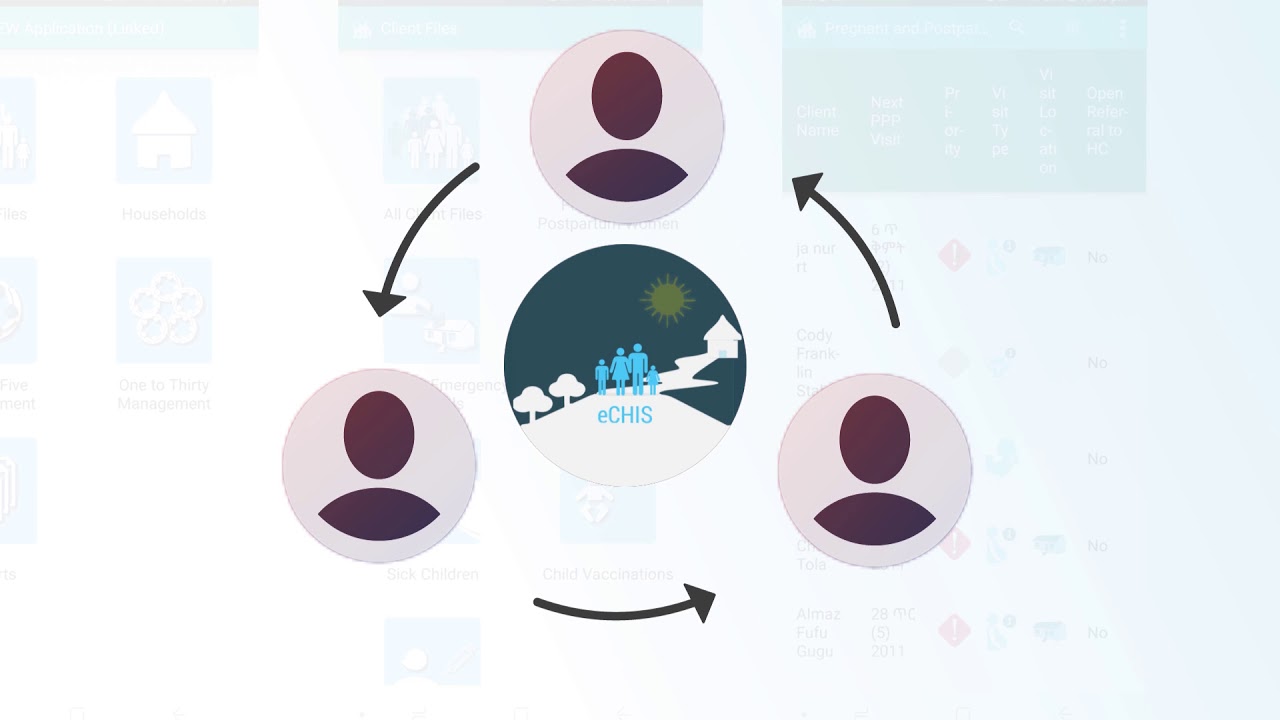
The Community Mapping Census app came first, acting as a survey to collect a roster of people living within a household, their basic demographic information, and their mobile numbers. These targeted data, collected in CommCare, allow for field-based prioritization and targeted SMS messages based on the client’s age and stage of the 1,000-day period.
Helen Keller International (HKI) initially delivered mobile phones with the application pre-installed to 600 SII frontline workers (FLWs). As the workforce grew, a total of 1,500 SII FLWs received mobile devices with the app. By the end of 2020, these FLWs had gone door to door to register all 2 million households in their communities.
Soon after, data collection for the Community Mapping Census was integrated into the ongoing program to ensure that beyond registration, SII frontline workers also:
- Inform families about airing details of the Bhanchhim Aama radio program.
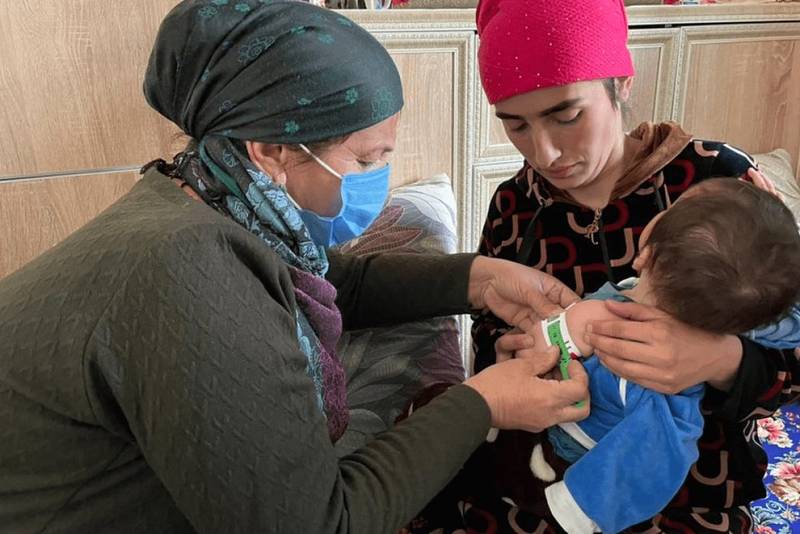
- Refer malnourished children and pregnant women with danger signs to health facilities.
- Provide health and nutrition counseling to 1,000-day households.
Between December 2016 and December 2020, FLWs used the Community Mapping Census to record 10 million clients, including more than 200,000 women in the 1,000-day period.
Monitoring Tools
Dimagi made a second CommCare platform for the project: Monitoring Tools. Based on the population mapping from the Community Mapping Census app, the Monitoring Tools app allows FLWs to target and follow up with 1,000-day mothers during three key windows:
- Pregnancy through seven days after birth.
- During the child’s first six months of life.
- From the child’s seventh month to the 24th month.
These metrics allow FLWs to monitor a client’s progress toward key targets, such as a minimum of four antenatal care (ANC) visits, at least three postnatal care (PNC) check-ups, participation in health mothers group meetings, intake of 180 iron and folic acid tablets during pregnancy, and handwashing.
The FLWs are required to fill five checklists per month, which the system randomizes. FLWs are also responsible for visiting predefined areas where eligible respondents are available via mobile phone. As the checklist is dependent upon their stage of the 1,000-day period, the client is eligible for only one checklist out of the three.
The Monitoring Tools app also supports protocol checks and performance reviews with users fulfilling the agricultural and health frontline worker roles. This includes Village Model Farmers (VMF), Female Community Health Volunteers (FCHV), and Health Facility Workers.
Due to cell phone data coverage issues, some Field Supervisors use their phones offline for more than a month at a time. Once they are able to sync to the server, the data stored on their phones becomes available for project teams to use for analysis. Program administrators then use CommCare’s open API to download form results from the Monitoring Tools app for visualization of progress and achievements in DHIS2 and further analysis in STATA.
“CommCare has provided us a secure API (Application Programming Interface) that allowed us to place a custom built automatic data pulling windows service for managing and analyzing data in local SQL server. It has helped further to design our own custom web-based system for visualizing the dashboard and providing simple and user-friendlier report generators, developed with user centric design approach that can produce disaggregated information from multi-sectional analysis.”
Rajan Kumar Shrestha, MIS Coordinator, Suaahara II
Job Aid
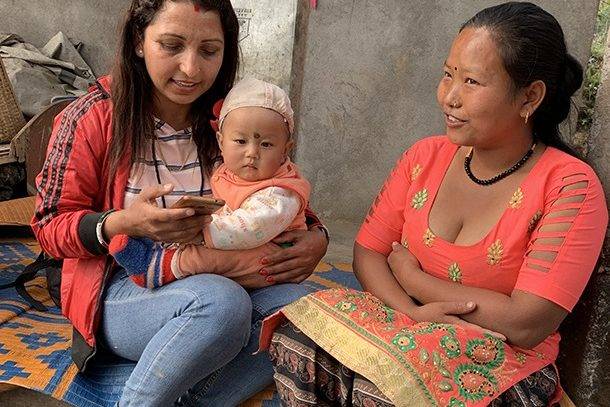
The third CommCare-based platform for SII, Job Aid, helps FLWs counsel mothers at the household level. Field Supervisors use the Job Aid module to assign home visits to Community Nutrition Facilitators, who receive situationally-appropriate scripts that ensure protocols are followed and accurate, consistent behavior change messaging is presented to the clients. The app allows the FLW to see what stage the mother is in and offers targeted and appropriate SBCC material for their household visits. Additionally, the module prompts FLWs if there are special-case visits that should be scheduled, for example due to increased nutrition or health concerns flagged by the application.
“CommCare has become very helpful for us. From this application, we fill in the checklist of households, village model farmers, and female community health volunteers. [It] helps us assess the situation and provide need-based counseling. Similarly, updating new pregnant women in the system helps us in addressing the health and nutritional needs of pregnant women through SMS push messages.”
Chandrakala Pahari Magar, Municipal Nutrition Facilitator, Gulmi
Feature highlight: linked domains
This application is a good example of using two linked project spaces to run a large, complex, and long-term deployment. One domain houses the development version of the app, where app configuration takes place. Once approved and tested, this configuration is pushed to a connected domain where all the live users work. This means test data and live data are not in danger of mixing, and any updates to the app can be completed in a secure and isolated space before being pushed out to the field.
Implementation
During the initial scoping discussions, the SII consortium partners requested an accelerated rollout of the Monitoring Tools app in order to meet long-term project timelines. The initial deployment supported 600 FLWs, but this workforce expanded to 1,500 FLWs a year ahead of the original schedule. All 1,500 FLWs were subsequently armed with the application pre-downloaded on a mobile device. Dimagi also delivered app versions v1 and v2 for the full cohort of mobile users on the same timeline. As program needs changed, Dimagi’s priorities quickly adapted to include the Job Aid digital solution to support regular visits to 1,000-day mothers.
“CommCare is amazing. It has helped us to collect high-volume information easily and also in the management and monitoring of a huge amount of staff spread across a huge geographical area. As a program coordinator who has to supervise a large number of staff spread across one or two districts, Commcare has supported us to distantly monitor the movement of staff. CommCare is easy to operate and even a new staff member learns to use this application within a few days. There are no high technical specifications required to operate the app and hence is usable in a normal smartphone. It also largely reduces the paperwork.”
Bharat Sarma Prasai, Program Coordinator, Suaahara II
Impact
As of January 2021, FLWs had used the CommCare platform to register 2 million households and 10 million Nepali residents, including approximately 200,000 1,000-day mothers.
As of January 2021, FLWs had used CommCare to register 2 million households and 10 million Nepali residents, including approximately 200,000 women in the 1,000-day period.
In 2017, SII was awarded the grand prize in USAID’s Innovation to Action. The SII consortium partners have stated that this was directly connected to the implementation of CommCare and support provided by Dimagi.
In 2020, when COVID-19 spread to Nepal, the pre-built digital data systems proved vital to the response. Without an existing database of phone numbers of FCHVs, FLWs, and millions of households around Nepal, contact with these families could not have continued. Instead, the program was able to transition to remote-based tele-counselling or lean more heavily on the SMS-based communications, continuing care amidst the pandemic.
Running a large community health program?
Talk to our team about scaling household-level data collection with CommCare.
Get in touch