In this post
Guatemala’s northern highlands has one of the highest burdens of maternal mortality in the world, driven by a substantial majority of the population living below the poverty line and a severe lack of formal health services. To improve maternal care and reproductive health in Guatemala, TulaSalud introduced a digital health program for frontline health workers supported by CommCare. In collaboration with the Guatemalan Ministry of Health, the organization has expanded its community-based digital health program beyond Alta Verapaz to three additional priority regions (Huehuetenango, Quiché, and Sololà) and increased accountability at all levels.
The problem
Rural Guatemala suffers from a severe lack of formal health services and has one of the highest burdens of maternal mortality in the world. TulaSalud focuses on four regions of rural Guatemala with extremely high rates of maternal mortality, child malnutrition, and malaria. Many of the pregnancies in these regions are considered high-risk, and the children who are born often suffer from chronic malnutrition. In order to reach a population of nearly 3.4 million people, 72% of whom live below the poverty line, TulaSalud needed a solution that could provide those in need with the care they deserve.
TulaSalud introduced a digital health platform to combat these health issues, but they still faced technical challenges such as non-healthcare-specific workflows, poor usage in rural areas, limited data flow and decision support, and no case management.
The solution
From its inception, the aim of TulaSalud’s digital health program has been to help frontline workers in primary health better manage high-risk pregnancies and offer quality health services. Since then, they have developed complementary workflows to monitor the spread of malaria and combat chronic malnutrition in children. To improve the effectiveness and efficiency of rural health services in Guatemala at large, this digital health system enables the sharing of clinical and performance information with compliance supervisors, clinical supervisors, and other service providers in the healthcare system, especially the Ministry of Health.
Kawok, an app built on CommCare
Seeking to replace their original digital health solution, TulaSalud turned to CommCare. Their hope was that a new application, called Kawok and based on CommCare, would be able to strengthen the Guatemalan Ministry of Health’s system of care by improving access through an expanded network of app-enabled frontline workers and increasing accountability at all levels with enhanced supervision.
The app itself serves two primary functions. The first is a job aid for frontline workers to improve their productivity and effectiveness at maternal and neonatal care, community surveying, malaria monitoring and treatment, and auxiliary nurse services. The application offers offline access to 38 health education and promotion videos translated into 8 Mayan languages, covering everything from pregnancy planning and risk signs to child malnutrition, breastfeeding, gender-based violence, and family planning.
The second is a monitoring and evaluation platform for various levels of the health system, from evaluating the productivity of frontline workers to tracking and monitoring individual high-risk and upcoming pregnancies. All of these data help program administrators prioritize limited health system resources in high-risk communities and regions. Today, frontline workers also use the application to keep track of the phone calls they make to patients, supervisors, and health clinics. As a whole, the program makes over 10,000 phone calls each week, analyzing those calls to understand the behavior of frontline workers, the needs of patients, and the value of the interventions.
“CommCare is a great platform that is very well designed, implemented, continually improved and supported. We could not have developed Kawok without CommCare.”
Ray Brunsting, CTO, Tula Foundation
Advanced reporting
In order to better visualize incoming data, TulaSalud’s IT team developed Kawok, a suite of tools built on the CommCare platform that incorporates custom-built application development, reporting tools, and Google Earth. Kawok enables TulaSalud staff to look up patient locations and health information on customized dashboards and maps, as well as monitor disease outbreaks in real time. Kawok is fully integrated with the Ministry of Health and several different regional and local health systems.
Implementation
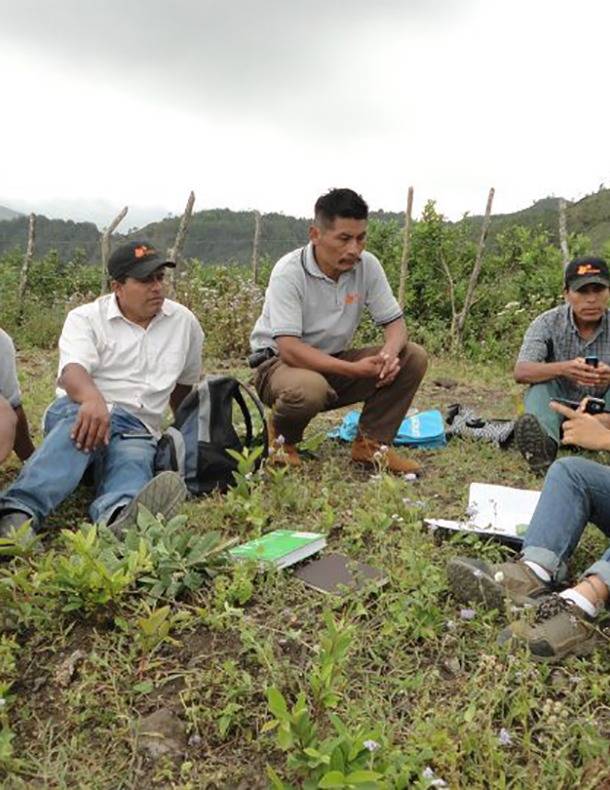
Kawok’s initial implementation began in the district of Senahu, where Dimagi and TulaSalud conducted interviews and user tests with a small group of frontline workers. These workers had been using CommCare in the field for six weeks at the time of the interviews, and all had used TulaSalud’s prior mobile health system, so they were able to give direct feedback on CommCare and provide comparative insight into the effectiveness of other mobile tools for their job. In addition to these interviews, staff from Dimagi and TulaSalud shadowed frontline workers on their patient visits to observe how the application was used in the field.
After an effective pilot covering approximately one-third of Alta Verapaz, TulaSalud expanded their coverage to the entire region, introducing the application to more than 4,000 nurses, frontline workers, and their supervisors. Since then, additional features have been added, including modules for specific health crises and phone-call tracking and support, and the program scaled to additional regions in Guatemala, including Huehuetenango, Quiché, and Sololà.
Impact
The introduction of the new CommCare-based app aided in each of the objective areas: extended coverage, improved quality of care, and increased accountability. Using the application, frontline workers have logged more than 300,000 cases, including 81,500 malnourished children and 22,000 pregnancies, across 700 communities in rural Guatemala that account for more than 3.4 million people. Service can also be administered in five Mayan indigenous languages (Akateko, Chuj-Coatán, Chuj-San Mateo, Q’anjobal, and Mam), ensuring no one goes without care.
Frontline workers have logged more than 300,000 cases through Kawok, including 81,500 malnourished children and 22,000 pregnancies, across 700 communities in rural Guatemala.
Due to the integrated health care delivery modules and immediate feedback and support offered by the app, frontline workers were able to spot risk factors in over 54% of the pregnancies they tracked. TulaSalud and the local Ministry of Health track the performance of more than 4,000 frontline health workers and nurses, monitoring their actions and offering advice to improve their performance.
“In this program, we receive the alerts for the high-risk pregnancies immediately, at the moment that we are with the patient.”
Ramiro, Front Line Worker
Building a community health program in a low-resource setting?
Talk to our team about bringing CommCare to your maternal and child health work.
Get in touch