In this post
Sub-Saharan Africa carries roughly a quarter of the global disease burden, yet the number of clinical research studies conducted in the region has always been disproportionately low. A team from Novartis, the Kenya Medical Research Institute (KEMRI), and CommCare’s maker Dimagi saw the build-out of new research infrastructure in Africa as a chance to institute highly efficient clinical research systems from the outset, and piloted a mobile digital platform to support high-quality data collection in a regulated trial.
The problem: paper transcription slows trials down
In traditional clinical trials, data is recorded on paper and then transcribed multiple times before it reaches a database. That process imposes considerable burden on trial operations, and each manual transcription is a chance for staff who are unfamiliar with the data they are handling to introduce errors. Paper-based systems also delay data availability and complicate the work of reconciling and resolving discrepancies once they are found.
The setting: a Phase I pharmacokinetic study in Nairobi
The pilot ran at the Centre for Research in Therapeutic Sciences (CREATES) at Strathmore University in Nairobi, Kenya, part of the KEMRI research community. The system was deployed in a Phase I pharmacokinetic study in healthy human volunteers, which involved 38 screened volunteers and 16 recruited participants. A pharmacokinetic study measures how a drug moves through the body over time, so it depends on accurate, well-timed, and traceable measurements from each participant.
The solution: CommCare built from the case report form
The team built the data-collection application on CommCare, an open-source, cloud-based platform for health programs developed by Dimagi. Two members of the CREATES team received online and in-person training from Dimagi and built the application themselves, based on the definition of the study’s case report form (CRF). The application was developed using common data standards, specifically the Clinical Data Interchange Standards Consortium (CDISC) Operational Data Model.
Edit checks were built into the application to check the validity of a data value as it was entered on the mobile device, catching problems at the point of entry. The team refined the application through two-day field-testing sessions, in which administrators, nurses, doctors, laboratory technicians, and quality-control staff used it in a mock-trial setting before the study began.
How CommCare was used in the trial
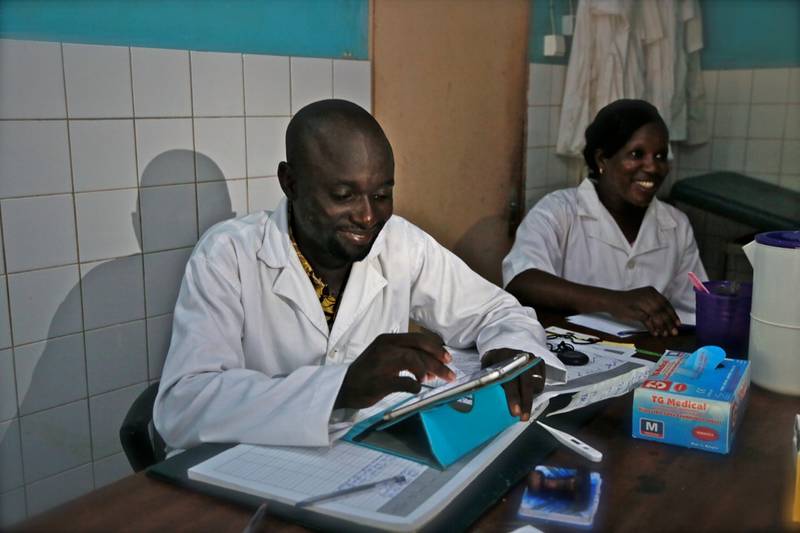
Clinical staff entered data on Samsung Galaxy Tab 4 tablets, and the data moved from CommCare directly into an electronic data capture (EDC) system, OpenClinica. Only the data fields that are part of the study’s CRF were included in the export; other fields were stored securely in CommCare but not exported, which helped protect participant confidentiality. The integration used the CDISC Operational Data Model, a vendor-neutral, platform-independent format for the interchange and archive of clinical study data, carrying the clinical data together with its associated metadata, administrative data, reference data, and audit information.
Rather than validate the CommCare platform itself under the United States Food and Drug Administration’s 21 CFR Part 11 standard for electronic records, the team used an Extraction and Investigator Verification approach: the study’s principal investigator, or a delegate, reviewed, confirmed, and signed off on the data in OpenClinica. That step obviated the need to validate the CommCare platform and ensured that data transferred from the mobile platform to the EDC system was transferred accurately, correctly, and while preserving patient confidentiality. The platform met ALCOA+CCEA requirements, meaning data was attributable, legible, contemporaneous, original, accurate, complete, consistent, enduring, and available.
Implementation
Staff were trained at the outset, and refresher training was organized one week before the study began, covering the proper use of the Android tablets, the CommCare platform, and the data-collection application. To check that the approach worked, the team compared data extracts from CommCare and OpenClinica by exporting both into spreadsheets; the comparison was performed three times by different teams, and a randomly selected subset of participants was checked field by field across the two systems.
Impact
The electronic data-collection platform successfully supported the conduct of the study. Manual comparisons confirmed that all mandatory data elements described in the CRF, including safety data, adverse-event reports, and concomitant-medication lists, were uploaded from CommCare to OpenClinica. Because edit checks caught problems at the point of entry, the number of data queries raised after the study fell sharply.
For a study of this size the team expected to manage around 100 data queries; with the mobile platform, only 21 were raised, and all study queries were resolved in one working day.
Multidisciplinary users reported high levels of satisfaction with the mobile application and highlighted substantial advantages compared with traditional paper record systems. Staff said the platform helped them stay better organized, that the overall process was less cluttered than paper, and that the application saved them time. Quality-control staff found the new online review process ran smoothly and were able to easily access, locate, and review submitted forms online. The authors noted some limitations too: staff less familiar with mobile devices found the tablets more time consuming, quality-control reviewers found it hard to tell which forms they had already checked, and participants had to be registered separately in both systems.
Conclusions
The pilot demonstrated the feasibility of using a mobile digital platform, designed specifically for low-resource settings, to support clinical research data collection. The authors recommended that stakeholders building new African research infrastructure consider adopting such innovative technologies and approaches from the start, and pointed to further opportunities, including the automatic exchange of study metadata through CDISC standards and digitizing paper-intensive procedures such as informed consent. As part of building local capability, CREATES team members hosted a two-hour live demonstration at a regional clinical-trial workshop attended by roughly 50 clinical investigators, and began transferring the technology to another Phase I center in Sub-Saharan Africa.
Running a regulated trial?
Talk to our team about CommCare for clinical-trial data capture and integration with electronic data capture systems.
Get in touch